
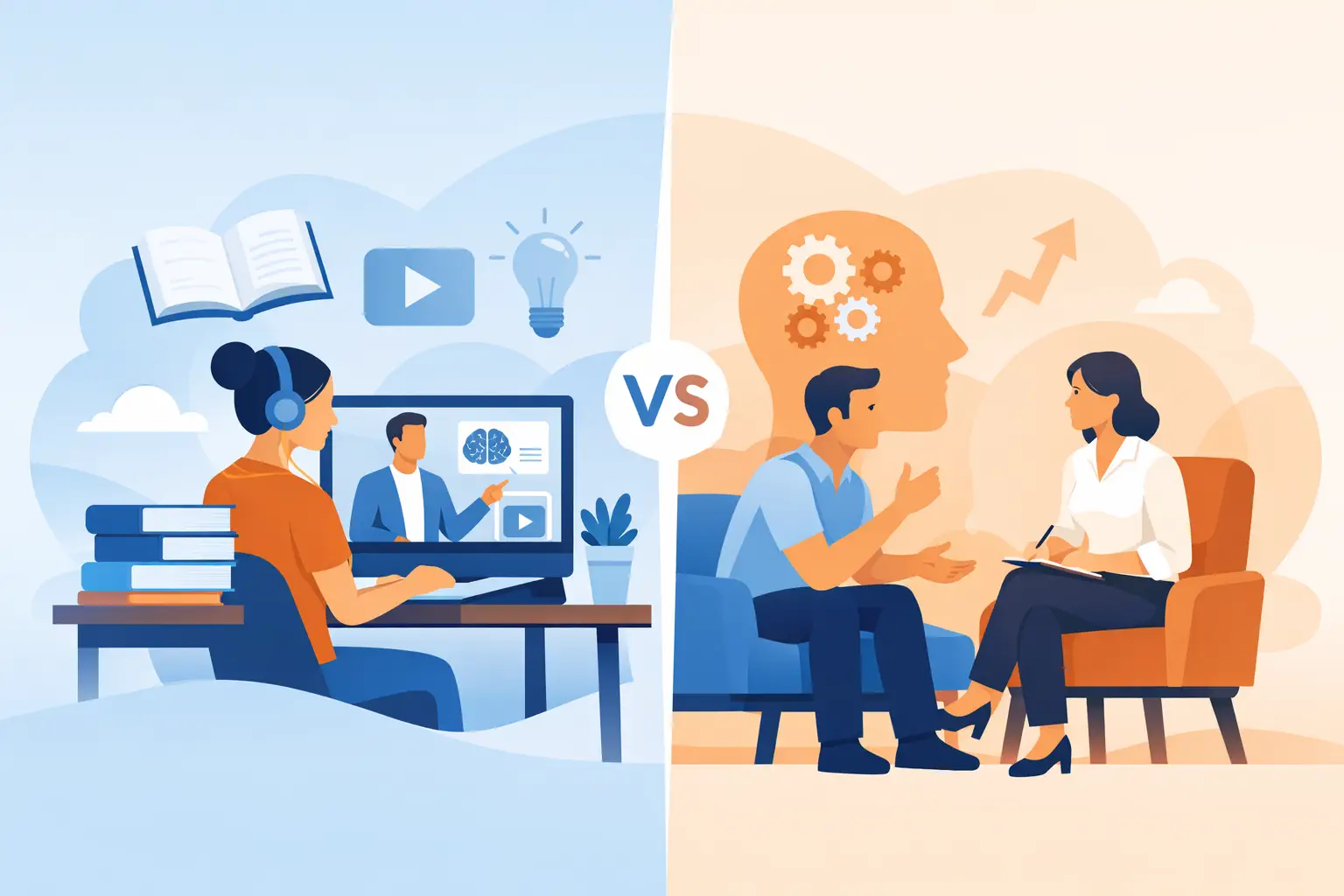

You do not need more inspirational quotes saved on your phone. You need a path that helps you follow through when your mind gets loud, your energy drops, and the old version of you tries to take control again. The mindset course vs coaching decision comes down to one honest question: do you need a clear system to work through, or do you need someone beside you while you work through it?
Both can create real change. Both can help you challenge self-sabotage, build confidence, and create a life that feels more like your own. But they offer support in very different ways. Choosing the right fit can save you from buying another program you never finish or entering coaching before you know what kind of help you truly need.
What a mindset course gives you
A mindset course gives you a structured path. Instead of trying to piece together advice from podcasts, social media, and late-night searches, you move through a clear sequence designed to shift how you think, feel, and act.
The strongest courses are not built around hype. They help you recognize the beliefs driving your behavior: the belief that you are behind, not disciplined enough, too damaged, or somehow incapable of changing. From there, they offer practical tools such as guided exercises, meditations, reflections, and repeatable daily practices.
That structure matters when your mind feels scattered. You do not have to wake up and decide what to work on every day. The next step is already there. You can return to a lesson after a difficult week, repeat an audio when anxiety rises, and progress at a pace that respects your real life.
A course may be the right choice if you are motivated to do the work but need direction. It can also be a powerful place to start if you want privacy, flexibility, and a lower-cost way to build a foundation before making a bigger commitment.
The trade-off is simple: a course cannot look you in the eye and challenge the excuse you have been repeating for years. It can guide you, but it cannot personally adapt every lesson to the details of your relationship, career, recovery, or current season.
What mindset coaching gives you
Mindset coaching is personal support built around your specific patterns and goals. A coach can help you identify the story beneath the struggle, whether that is fear of failure, people-pleasing, perfectionism, shame, or the habit of abandoning yourself the moment progress gets uncomfortable.
Good coaching creates a space where you can be honest. Not polished. Not positive for the sake of it. Honest. You can say, “I know what I should do, but I still do not do it,” and work with someone who helps you understand why.
Coaching also brings accountability. When you have promised yourself a hundred times that Monday will be different, having a mentor who checks in can interrupt the cycle. They can help you turn a vague goal like “get my life together” into decisions you can actually keep: take the walk, make the call, set the boundary, apply for the opportunity, stop negotiating with the habit that is draining you.
The trade-off is that coaching usually requires more time, emotional openness, and financial investment. It is also not magic. A coach can see your potential, offer perspective, and hold you accountable, but they cannot do the uncomfortable reps for you. Lasting change still happens in the moments when nobody is watching.
Mindset course vs coaching: the real difference
The biggest difference is not that one is better and one is worse. It is the level of personalization and proximity.
A course says, “Here is a proven path. Walk it consistently.” Coaching says, “Let us look at what keeps pulling you off the path, then build a plan around your life.” One offers a repeatable framework. The other offers direct guidance within that framework.
Think about what happens when you hit resistance. If you can use a journal prompt, a meditation, or a daily lesson to reset yourself and move forward, a course may give you exactly what you need. If resistance tends to become a full retreat – missed workouts, isolation, numbing habits, negative self-talk, and another month lost – coaching may provide the support that helps you break the pattern sooner.
Your learning style matters too. Some people gain confidence by taking in material privately, reflecting deeply, and applying it at their own pace. Others need conversation to process what they are learning. They need to hear themselves say the fear out loud before they can stop letting it run the show.
When a course is the stronger first step
Choose a mindset course when you want a practical reset without the pressure of a one-on-one relationship. It is especially helpful when you feel stuck but cannot yet name every reason why. Structured lessons can give language to experiences you have carried silently for years.
A course is also a strong fit when consistency is your main challenge. Daily audio guidance, short practices, and simple reflection can help you build momentum without asking you to overhaul your entire life overnight. Small shifts become evidence. You start to trust yourself because you are finally keeping promises to yourself.
This is where a mentor-led digital experience can be powerful. At Total Mindshift, the focus is not passive information. It is practical mindset rewiring through guidance you can return to daily, especially when you need to quiet the noise and choose a better response.
When coaching may be worth the investment
Coaching can be the right next move when your situation feels highly personal or complex. Maybe you keep reaching the same ceiling in your career. Maybe old relationship patterns keep repeating. Maybe you have a goal but cannot tell whether your hesitation is wisdom, fear, or burnout.
It can also help when you have tried to change alone and keep losing momentum. There is no shame in that. Independence is valuable, but no one earns a better life by refusing support. Sometimes the most powerful thing you can do is let someone help you see the blind spots you cannot see from inside your own story.
Look for coaching that feels empowering, not dependent. A healthy coach should help you build your own inner authority. You should leave sessions more capable of making decisions, not more convinced that you cannot function without them.
If you are dealing with a mental health crisis, trauma symptoms, or concerns about your safety, seek support from a qualified mental health professional. Mindset tools and coaching can complement personal growth, but they are not a substitute for clinical care when clinical care is needed.
You may not have to choose forever
Many people make the best progress by combining both approaches over time. They begin with a course to create language, routines, and self-awareness. Then they choose coaching when they are ready to work through a specific obstacle with greater depth. Others use coaching first, then rely on a course or daily practice to maintain the changes they have made.
What matters is not choosing the most impressive option. It is choosing the support you will honestly use. Do not buy a course because it feels safer if you know you need accountability. Do not hire a coach because it sounds more serious if what you really need is space to build trust in yourself.
You are not broken because you need a structure. You are not weak because you need support. You are a person who has been carrying patterns, pressure, and pain, and you are allowed to choose a new way forward. Start with the kind of guidance that helps you take one real step today. That step can become the moment your life begins to move again.
Latest Post

How to Create Healthy Thought Habits That Last
October 3, 2026
No Comments

Daily Mindset Audio Practice That Changes Your Day
October 1, 2026
No Comments

The Power of Sounds: Finding Focus and Calm. FREE App
September 29, 2026
No Comments