


IMPORTANT: Download your FREE forever ‘Sounds’ micro course , with the FREE app below
If you live with ADHD or frequently feel overwhelmed, you already know how much your environment affects your ability to concentrate and stay calm. Everyday noises—a ticking clock, background chatter, or sudden street sounds—can feel impossible to tune out. But what if the right kind of sound could actually become your most reliable tool for focus and relaxation?
Sound is not just something you hear; it is something your brain actively experiences and processes. For people with ADHD, certain sound environments can provide the sensory input the brain craves, helping to mask distractions and create a sense of structure. This guide explores how different types of sound—from nature sounds and colored noise to binaural beats—can be used strategically to manage stress, improve attention, and support daily calm.
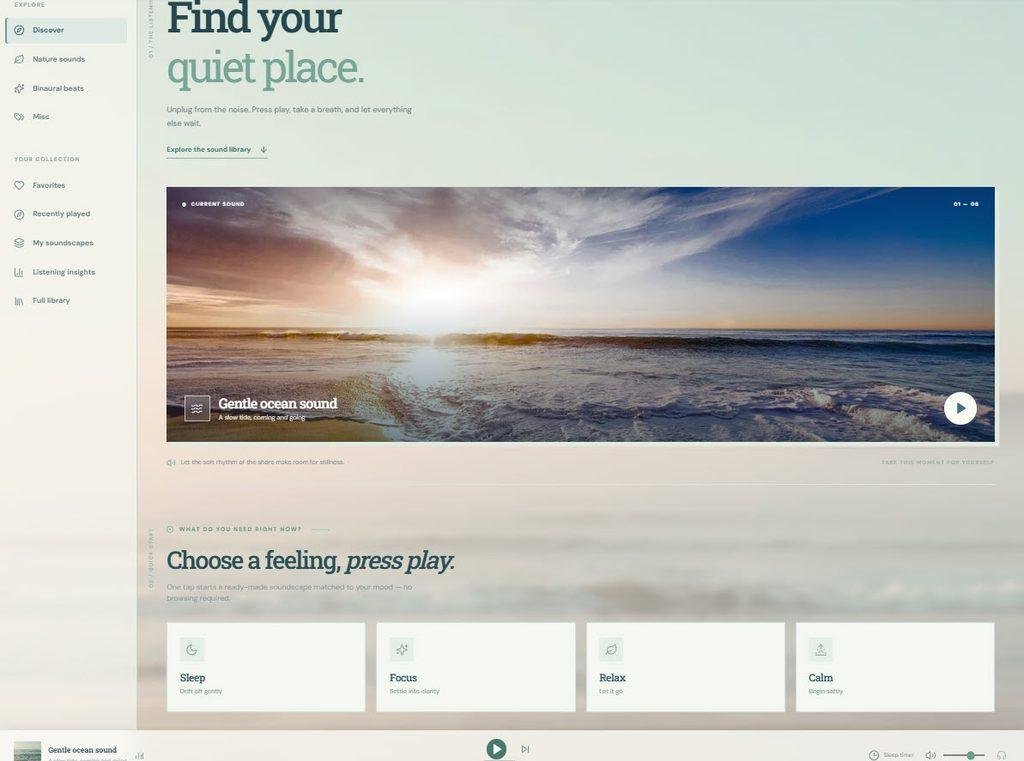
If you are ready to start experimenting right away, you can explore a free collection of calming sounds designed for focus and relaxation. Get your FREE forever app – no credit card required.
How Sound Affects the ADHD Brain
To understand why sound can be such a powerful tool, it helps to know a little about how the ADHD brain processes auditory information.
The Science of Sensory Gating
People with ADHD often experience impaired sensory gating, which means the brain struggles to suppress unnecessary noises. Instead of tuning out irrelevant sounds, the ADHD brain processes everything at once, which can lead to stress, fatigue, and a loss of focus. Research has shown that individuals with ADHD display heightened activity in auditory regions of the brain and weaker control from the prefrontal cortex, which is the area responsible for blocking irrelevant sounds.
This “open filter” effect explains why busy environments—cafés, classrooms, or open-plan offices—can feel mentally exhausting within minutes. It also explains why consistent, non-intrusive background sound can be so helpful: it provides a steady, predictable auditory input that the brain does not have to constantly monitor or react to.
Sound as a Tool for Arousal Regulation
Several models propose that the challenges of ADHD stem from difficulty maintaining alertness and sustaining attention because of chronic underarousal. In simple terms, the ADHD brain often needs more stimulation to reach an optimal state of focus. The right sound environment can provide that stimulation in a controlled, non-disruptive way.
This is why some sounds can calm while others can energize or focus you. It is also why sound responses are highly individual—what calms or focuses one person may be distracting to another. The key is to experiment and observe your own reactions.
Types of Calming Sounds and Their Benefits
Different categories of sound offer distinct benefits. Understanding these differences can help you choose the right tool for each situation, whether you need to concentrate on deep work, wind down for sleep, or manage sensory overload.
Nature Sounds: Calm from the Environment
Nature sounds such as rainfall, ocean waves, and gentle forest ambience create a stable, predictable backdrop that soothes the mind. Unlike music with lyrics or unpredictable melodies, nature’s rhythms are easy to tune into or out of, helping to reduce stress and mental noise.
Research supports these benefits. A study examining nature-based soundscapes found that exposure to these sounds reduced heart and respiratory rates, indicating enhanced parasympathetic activity—the body’s natural relaxation response. Another study on birdsong found that moderate sound levels (around 45–50 dB) enhanced alpha wave activity by 14.1%, which is associated with mental relaxation. In contrast, sounds at 60 dB actually increased EEG mental stress by 29%.
For individuals with ADHD, nature sounds can fulfill the brain’s need for sensory stimulation without being overwhelming. A two-hour ocean waves loop during reading or chores can prevent distractions from sudden street noise or household sounds, anchoring focus gently.
Colored Noise: White, Pink, and Brown
Colored noises are steady, static-like sounds, but their tone varies. White noise contains equal loudness at every frequency, making it ideal for masking sudden noises. Pink noise has more emphasis on lower frequencies, resembling the natural sound of rainfall or rustling leaves. Brown noise is deeper still, like distant thunder or a rumbling waterfall.
A major systematic review and meta-analysis published in the Journal of the American Academy of Child & Adolescent Psychiatry evaluated the effects of white and pink noise on attention tasks. The study included 13 studies with 335 participants and found that white and pink noise provided a small but statistically significant benefit on task performance for individuals with ADHD or high ADHD symptoms. The improvement was around 8 to 10% on attention and executive function tasks.
Importantly, the same study found that for individuals without ADHD, white and pink noise actually impaired task performance. This contrast highlights that noise-based interventions are specifically beneficial for those with ADHD or attention difficulties, and may be detrimental in shared spaces for those without attentional challenges.
Binaural Beats and Rhythm-Based Sound
Binaural beats are an auditory illusion created when you listen to two slightly different frequencies in each ear, usually via headphones. Your brain perceives the difference as a subtle third “beat.” Research suggests this can sometimes encourage brainwave patterns associated with relaxation or alertness.
Alpha-frequency binaural beats (typically 8–14 Hz) tend to enhance calm, while beta frequencies (14–30 Hz) may support focus and task performance. A study on closed-loop audio neuroregulation for ADHD found improved attention when the binaural beat lay in the beta or gamma range. Additionally, music engineered with rapid amplitude modulation has been shown to sustain attention preferentially in listeners with higher ADHD symptomatology, with beta-rate modulation producing the strongest benefit.
Repetitive, instrumental music—such as lo-fi hip-hop, classical pieces, or certain soft rock tracks—can also cue the brain to settle into a rhythm, lowering hyperactivity and easing distractions. The predictability of these sounds is what makes them effective for many people with ADHD.
How to Build Your Personal Sound Strategy
Now that you understand the different types of sound and their effects, it is time to design your own sound plan. The goal is to create a customized routine that supports your daily needs for focus, calm, and stress relief.
Step 1: Identify Key Situations
Start by identifying the key situations in your daily life where you would like more focus or calm. Common scenarios include:
- Deep work or studying
- Creative tasks or brainstorming
- Winding down in the evening
- Falling asleep or staying asleep
- Managing sensory overload in noisy environments
- Household chores or routine tasks
Step 2: Experiment with Sound Types
For each situation, consider which sound types felt most supportive during your experiments. Was it nature sounds for winding down? Brown noise for focus? A lo-fi beat when tackling chores? There is no single right answer—your preferences are personal.
Try creating personalized playlists or using apps with built-in soundscapes, and label them for specific purposes. You might have a “morning alertness” set, a “deep work focus” collection, and a “nighttime calm” sequence.
Step 3: Adjust Volume and Rotate Sounds
Volume is critical. Always start at a comfortable level where the sound fades into the background rather than taking center stage. Setting sounds too loud can create new overload or distraction. For nature sounds and colored noise, subtlety is key.
Rotate sounds and change volume as needed. Your needs may shift throughout the day or based on your stress levels. A sound that works well in the morning may feel irritating by the afternoon.
Step 4: Track Your Responses
Keep a simple journal or make notes on your phone about how each sound environment affects your mood and productivity. Over time, you will develop a reliable set of go-to sounds for different situations.
Scientific Evidence and Research
The use of sound for managing ADHD symptoms and stress is supported by a growing body of research. Here is a summary of the key findings:
White and Pink Noise for Attention
A systematic review and meta-analysis published in 2024 analyzed 13 studies with 335 participants. The researchers found that white and pink noise provided a small but statistically significant benefit on laboratory attention tasks for individuals with ADHD or high ADHD symptoms. The effect size was g = 0.249, indicating a small to moderate benefit.
The same analysis found that for non-ADHD individuals, white and pink noise had a negative effect (g = -0.212), meaning it actually impaired their task performance. This finding is important because it confirms that noise-based interventions are specifically beneficial for those with ADHD, not a universal solution.
White Noise and Classroom Attention
A preregistered study involving 59 children (36 with ADHD) aged 5–12 years found that white noise stimulation led to shorter reaction times on an alertness task for children with ADHD, but not for children without ADHD. However, the effects were small, and white noise was less effective for children with comorbid autism spectrum disorder. This suggests that acoustic stimulation may be a helpful classroom intervention for some children with ADHD, but individual differences—particularly co-occurring conditions—matter greatly.
Binaural Beats and Brainwave Entrainment
Research on binaural beats for ADHD has shown mixed but encouraging evidence. A study on closed-loop audio neuroregulation found improved attention when the binaural beat lay in the beta or gamma range. Music with beta-rate modulation produced the strongest benefit, accompanied by changes in stimulus-brain coupling.
However, researchers caution that results cannot be definitively attributed to brainwave entrainment alone, as they may also reflect the broader effects of sound therapy. More high-quality studies are needed to confirm efficacy.
Nature Sounds and Stress Recovery
A cross-over study examining nature-based soundscapes found that these sounds reduced heart and respiratory rates, indicating enhanced parasympathetic activity. The researchers concluded that nature-based soundscapes could serve as easily accessible therapeutic options for promoting immediate recovery and reducing daily stress.
An EEG study on birdsong found that moderate sound levels (45–50 dB) enhanced alpha wave activity by 14.1%, indicating mental relaxation. At 60 dB, however, mental stress increased by 29%, emphasizing the importance of keeping volume at a moderate level.
Safety Considerations and Precautions
While sound-based strategies are generally low-risk and accessible, there are important considerations to keep in mind.
Volume Management
The most common mistake is setting sounds too loud in an attempt to drown out everything else. This can create new sensory overload or distraction, and prolonged exposure to loud sounds can damage hearing. Always start at a comfortable level where the sound fades into the background. Subtlety is key for both effectiveness and safety.
Sensory Sensitivity and Misophonia
Many people with ADHD experience decreased sound tolerance, with estimates suggesting it affects 50 to 70% of the neurodivergent population. This can include misophonia—strong negative emotional responses to specific trigger sounds—as well as general sensory hypersensitivity. Research has found that symptoms of misophonia are significantly associated with ADHD.
If you feel restless or irritable with a certain sound, trust your instincts and change it. There is no need to force yourself to tolerate noises that do not work for you. If you still feel overwhelmed, spend some moments in complete silence, then ease back into sound with what feels best.
Individual Variation
Sound responses are highly individual. A sound that calms or focuses one person may be distracting or irritating to another. Even within the same category—such as white, pink, or brown noise—preferences vary. Some people find white noise grating, while others find pink or brown background sounds more pleasant. If one noise type is not working, do not hesitate to try another.
Binaural Beats and Headphones
Binaural beats require headphones to work as intended. If you do not like them or find them distracting, do not force it. Experiment with different types or rhythms instead. Also, be mindful that binaural beats can be overstimulating for some individuals, particularly those with sensory sensitivities.
Disclaimer
The content of this post is provided for informational purposes only. It is essential to consult with a qualified healthcare professional before making any decisions regarding your health or wellness. The author is not a licensed medical professional, and this information should not be considered medical advice.
Frequently Asked Questions
What is the best sound for ADHD focus?
There is no single “best” sound for ADHD focus because sound responses are highly individual. However, research suggests that white and pink noise can provide a small benefit for attention tasks in people with ADHD. Many people also find brown noise, nature sounds, and lo-fi instrumental music helpful. The key is to experiment and observe which sounds help you personally sustain attention without becoming distracting.
Do binaural beats really work for ADHD?
Research on binaural beats for ADHD has shown mixed but encouraging results. Some studies have found improved attention when the beat lies in the beta or gamma range. However, results cannot be definitively attributed to brainwave entrainment alone, and more high-quality studies are needed. Binaural beats require headphones and may be distracting or overstimulating for some individuals.
Can white noise help with ADHD and sleep?
White noise and other colored noises can be helpful for sleep by masking disruptive environmental sounds and providing a consistent, predictable auditory backdrop. Many people with ADHD find that brown noise in particular helps calm racing thoughts at bedtime. As always, keep the volume at a comfortable, background level—loud sounds can be counterproductive and may disrupt sleep.
What is the difference between white, pink, and brown noise?
White noise contains equal loudness at every frequency, making it sound like static. Pink noise has more emphasis on lower frequencies and resembles rainfall or rustling leaves. Brown noise is even deeper, like distant thunder or a rumbling waterfall. Each type may appeal to different people and work better for different situations.
How loud should calming sounds be for focus?
Sounds should be set at a comfortable level where they fade into the background rather than taking center stage. For nature sounds, research suggests that moderate levels (around 45–50 dB) are optimal for relaxation, while louder volumes (60 dB and above) can actually increase stress. Start low and adjust until the sound feels present but not dominating.

Start Your Sound Journey Today
You have learned how different types of sound can help manage ADHD symptoms, improve focus, and provide daily calm. The next step is to start experimenting and discover your personal sound strategy.
To make it easy to get started, here is a free forever micro course and free app that offers a curated collection of calming sounds for focus and relaxation. There is no need to pay for an expensive app. It’s our way of giving back, by helping you and others to get control back, and experience more happiness in your life
What is your experience with using sound for focus or relaxation? Have you found a particular type of sound that works best for you? Share your thoughts in the comments below—your experience might help someone else on their journey.
FREE forever Calming sounds app – CLICK HERE
If you want assistance with this article, please Contact Us