

Thought For The Week

"Most people pay more for what goes on their head, than what goes in it"

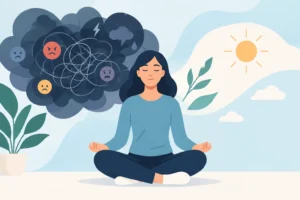
How to Create Healthy Thought Habits That Last

How to Create Healthy Thought Habits That Last

Your mind can turn one difficult moment into an entire story about your future. A missed call becomes rejection. A mistake at work becomes proof that you are not capable. One hard day becomes evidence that you will never change.

That story is not always the truth. It is often a habit.

Learning how to create healthy thought habits is not about forcing yourself to be cheerful or pretending life is easy. It is about training your mind to respond with more honesty, strength, and self-respect. When you change the thoughts you repeatedly entertain, you change the emotional direction of your days.

You do not need a perfect mindset to begin. You need a decision: you will no longer let every fearful thought take the wheel.

Why Your Thoughts Keep Repeating

Your brain is built to notice patterns. The thoughts you repeat most often become familiar pathways, even when they hurt you. If you have spent years thinking, “I always mess things up,” your mind may offer that sentence automatically whenever something goes wrong.

Automatic does not mean permanent.

Many negative thought habits began as an attempt to protect you. Expecting disappointment may have felt safer than hoping. Criticizing yourself first may have seemed like a way to avoid criticism from others. Staying small may have helped you avoid the risk of failing.

But old protection can become a new prison. The thought pattern that once helped you survive a difficult season may now be keeping you from speaking up, trying again, trusting yourself, or receiving the good that is available to you.

The goal is not to judge yourself for having negative thoughts. The goal is to notice them early enough that you can choose a better response.

Start by Catching the Thought, Not Fighting It

Most people try to change their mindset by arguing with every negative thought. That can become exhausting. A healthier first step is awareness.

When you feel anxiety, shame, anger, or hopelessness rising, pause and ask: What am I telling myself right now?

Be specific. “I feel bad” is a feeling. “Everyone thinks I am a failure” is a thought. Once you can name the thought, it becomes something you can examine instead of something you automatically obey.

Try this simple reset: say, “I am having the thought that I am behind.” That small shift creates space. You are no longer declaring the thought as fact. You are recognizing it as a mental event that has shown up in your mind.

This is not denial. Maybe you are behind on a goal. Maybe you did make a mistake. Healthy thinking does not erase reality. It keeps reality from becoming a cruel identity statement.

“I made a mistake” can lead to repair and growth. “I am a mistake” leads to paralysis. Learn to hear the difference.

How to Create Healthy Thought Habits Through Repetition

A new mindset is built through repetition, especially in ordinary moments. You do not need to wait for a breakdown, a major breakthrough, or the start of a new year. Your next thought is a place to practice.

Replace extremes with balanced truth

Negative thinking often speaks in extremes: always, never, everyone, no one, ruined, impossible. These words create emotional intensity, but they rarely give you the full picture.

When you catch an extreme thought, replace it with a balanced truth. For example, “I never follow through” can become, “I have struggled with consistency, and I can keep one promise to myself today.” “Nothing is working” can become, “This is not working the way I hoped, but I can look for the next useful step.”

Balanced thoughts may not feel as dramatic, but they are more powerful because they give you somewhere to go.

Build evidence for a stronger identity

Self-belief grows from evidence. If you want to think of yourself as disciplined, capable, calm, or resilient, give your mind proof in small daily actions.

Keep the promise to drink water before coffee. Take the walk you said you would take. Send the email you have avoided. Spend ten minutes on the goal that matters to you. Each action may seem small, yet it sends a clear message: “I am becoming someone who follows through.”

Do not wait to feel confident before you act. Action is often what creates confidence. Your mind learns from what you repeatedly do, not only from what you repeatedly say.

Use a compassionate inner voice

Many people believe harsh self-talk makes them stronger. It may create short bursts of pressure, but pressure is not the same as lasting motivation. Constant self-attack drains energy, increases shame, and makes it harder to recover when life gets difficult.

Speak to yourself like a committed mentor. A mentor does not excuse every choice, but they do not call you worthless when you struggle. They tell the truth and keep you moving.

Instead of, “Get it together, you are pathetic,” try, “This is a hard moment. Take responsibility, take one step, and do not abandon yourself.” That is not softness. That is emotional strength.

Create a Daily Mental Reset

Your mind needs direction before the demands of the day begin speaking for you. A daily reset can be brief, but it should be intentional.

In the morning, ask yourself three questions: What thought do I want to lead with today? What situation may challenge me? How will I respond when it does?

For example, you may choose: “I do not need to prove my worth today. I will focus on being present and doing my best.” If a difficult conversation is coming, decide in advance that you will breathe, listen, and avoid turning discomfort into self-criticism.

At night, reflect without putting yourself on trial. Notice one moment when you handled something well, one thought habit that tried to pull you down, and one adjustment you want to make tomorrow. This turns every day into training instead of a pass-or-fail test.

If writing feels like too much, record a short voice note. If your mornings are rushed, do it while making breakfast or sitting in the car before work. The best practice is the one you can repeat.

Protect Your Mind From What Reinforces Fear

You cannot control every thought that enters your mind, but you can influence what you feed it. If you begin and end every day consuming comparison, outrage, bad news, and voices that make you feel less than, it becomes harder to build peace.

Pay attention to what leaves you feeling inspired versus depleted. Some content may be entertaining but keep you trapped in envy or fear. Some relationships may repeatedly pull you back into an old version of yourself. This does not mean you must cut everyone off or ignore the world. It means you choose boundaries that support the life you are building.

Make room for inputs that steady you: encouraging audio, quiet reflection, movement, uplifting conversations, guided meditation, or reminders of what you value. Total Mindshift is built around this kind of daily support because lasting change needs more than a single burst of motivation. Your mind needs a new message often enough that it begins to believe it.

Expect Resistance, Then Keep Going

When you begin changing your thought habits, old patterns may get louder for a while. You may notice more negativity simply because you are paying attention for the first time. That does not mean the practice is failing.

Change can feel unfamiliar before it feels natural. A calmer response may initially feel weak if you are used to reacting. Self-compassion may feel undeserved if you have spent years earning your worth through struggle. Keep practicing anyway.

There will be days when your mind races and your old story feels convincing. On those days, lower the bar. Do not demand a complete transformation. Choose one truthful thought, one grounding breath, one healthy action, and one decision not to make your difficult moment mean something terrible about you.

You are allowed to rebuild your inner world slowly. You are allowed to outgrow the thoughts that kept you small. Every time you pause, question the old story, and choose a kinder, stronger response, you are setting yourself free – one thought at a time.

Leave a Comment

Social Media Success Agency
Scroll to Top

Fill Out Exercise

INTRODUCTION

This workbook is your private space for honest self-reflection. Take your time with each section. Write as much or as little as feels authentic to you. Your mentor will review your responses to better understand how to support you, but this is ultimately for your own growth and clarity.

Checkboxes

By signing below, I confirm my commitment to this life audit process:

Looking at your scores:

  • - Which area surprised you (higher or lower than expected)?
  • - Which low score bothers you the most?
  • - Which high score are you most grateful for?
  • PRACTICAL PREPARATION
    Checkboxes

    SUBMISSION NOTES Before submitting, ensure you have:

  • 1- Completed all sections
  • 2- Been honest in your responses
  • 3- Saved a copy for yourself
  • 4- Named the file correctly
  • Thank you for your openness and commitment. Your mentor will review this and provide feedback within 48 hours.

    INTRODUCTION

    This workbook will guide you through a detailed exploration of the 12 Life Domains. Take your time with each section. Be specific in your responses - vague answers lead to vague results.

    Before we dive deep, here are the 12 domains you'll be exploring:

    1. Professional Life & Career - Your work, skills, and professional identity
    2. Financial Wellness - Money mindset, habits, and security
    3. Physical Health - Body, energy, and vitality
    4. Mental & Emotional Wellbeing - Mindset, resilience, and inner peace
    5. Community – Friends and social connections
    6. Love & Partnership - Romantic life and intimacy
    7. Environment & Lifestyle - Daily routines and living space
    8. Purpose & Identity - Core values and life meaning
    9. Growth & Learning - Personal development and future vision
    10. Family Relationships – how you get on with parents, siblings etc.
    11. Hobbies – what you enjoy doing or would like to do
    12. Nutrition – your body’s fuel

    PART 4: PRIORITY SETTING

    Rank your domains by priority for improvement (1 = highest priority):

    Explain your top 3 priorities:

    SUBMISSION CHECKLIST
    Checkboxes

    INTRODUCTION

    This workbook guides you through a comprehensive examination of your professional life. Answer each question thoroughly - surface-level responses lead to surface-level insights.

    1. Describe your current professional situation:

    2. On a scale of 1-10, rate these aspects of your current work:

    3. Describe a typical workday from start to finish. How do you feel at each stage?

    4. What percentage of your work time is spent on: (Should total 100%)

    5. Complete these sentences

    1. List your last 3-5 positions and why you left each one

    Position 1

    Position 2

    Position 3

    Position 4

    Position 5

    5. What stories do you tell yourself about your career?

    5. What stories do you tell yourself about your career?

    1. What are your top 5 professional values?

    2. How well does your current work honour these values?

    2. What fears hold you back professionally?
    1. Based on everything above, what needs to change?
    SUBMISSION CHECKLIST
    Checkboxes

    INTRODUCTION

    This workbook explores your relationship with money - not just the numbers, but the beliefs, emotions, and patterns that drive your financial decisions. Answer honestly without judgment.

    1. When you think about money, what emotions come up?

    Complete these sentences:

    1. Growing up, money in my family was

    2. What did your parents/caregivers teach you about money through their words?

    3.What did they teach you through their actions?

    1. Do you know your exact: (Yes/No)

    3. Rate your financial health in these areas (1-10):

    4. What percentage of your income goes to (Should total 100%)

    5. Do you have:

    PART 4: SPENDING & EARNING PATTERNS

    1. What triggers you to spend money? (Check all that apply)
    4. How do you feel about your earning potential?
    2. Are you the one who: (Check all that apply)
    SUBMISSION CHECKLIST
    Checkboxes

    INTRODUCTION

    This workbook explores your relationship with your body and physical health. Approach each question with curiosity and compassion, not judgment. Your body is your lifelong partner - this is about understanding and supporting it better.

    1. Overall, how do you feel in your body right now? ( select one )
    4. What physical symptoms do you regularly experience? (Check all that apply)
    1. How would you describe your relationship with your body?
    1. How often do you engage in intentional movement/exercise?
    3. What prevents you from moving more? (Check all that apply)
    5. What's your relationship with exercise?

    PART 4: NUTRITION & NOURISHMENT

    3. What affects your sleep? (Check all that apply)
    4. How rested do you feel upon waking?
    How often do you listen to these signals?
    SUBMISSION CHECKLIST
    Checkboxes

    INTRODUCTION

    This workbook explores your inner world - your thoughts, emotions, and mental patterns. Approach each question with gentle curiosity. There's no judgment here, only understanding.

    1. How would you describe your typical mental state? (Circle all that apply)
    4. How do you typically handle difficult emotions?

    PART 3: THOUGHT PATTERNS

    1. What kind of self-talk dominates your mind?
    2. Common thoughts that run through your mind: (Check all that apply)
    3. How does stress manifest for you? (Check all that apply)
    4. Current coping strategies: (Check all you use)
    4. How often do you prioritize mental health?
    SUBMISSION CHECKLIST
    Checkboxes

    INTRODUCTION

    This workbook explores your social ecosystem - the relationships and connections that shape your life. Be honest about both the gifts and challenges in your relationships.

    2. Looking at your list:

    3. Rate the overall quality of your:

    1. In relationships, I tend to be the one who: (Check all that apply)
    2. What role do you typically play in groups?
    1. How would you describe your friendship circle?
    1. In relationships, are you better at:
    SUBMISSION CHECKLIST
    Checkboxes

    INTRODUCTION

    This workbook explores your intimate romantic world. Approach each question with honesty and compassion. Love is vulnerable territory - be gentle with yourself as you explore.

    1. My current relationship status:
    1. In relationships, I tend to: (Check primary pattern)
    4. Are you single because
    SUBMISSION CHECKLIST
    Checkboxes

    INTRODUCTION

    This workbook explores how your physical environment and daily lifestyle either support or hinder your wellbeing. Examine your spaces and routines with fresh eyes.

    2. What specific things in your environment bother you? (Check all that apply)

    Complete this declaration:

    SUBMISSION CHECKLIST
    Checkboxes

    INTRODUCTION

    This workbook explores the deepest questions: Who are you really? Why are you here? What matters most? Approach these questions with openness and patience. Your truth may surprise you.

    1. From this list, Check your top 10 values:
    SUBMISSION CHECKLIST
    Checkboxes

    INTRODUCTION

    This workbook explores your relationship with growth, learning, and personal evolution. Discover how you expand best and what's calling you forward.

    1. When faced with a challenge, my first thought is usually:
    2. My ideal learning environment includes:
    1. When something gets difficult, I typically:
    2. My relationship with failure is:
    1. What motivates you to grow? (Check all that apply)
    2. What stops you from growing? (Check all that apply)
    SUBMISSION CHECKLIST
    Checkboxes

    INTRODUCTION

    This workbook helps you identify patterns across all 12 domains and discover the root causes behind your challenges. Have your previous workbooks nearby for reference. (Some domains are outlined in the same workbook i.e., Relationships and Family, Physical Health and Nutrition, Environment and Lifestyle and Hobbies)

    1. I consistently tend to: (Check all that apply)
    3. My dominant emotional pattern is:

    (Create your own connections)

    SUBMISSION CHECKLIST
    Checkboxes

    INTRODUCTION

    This workbook synthesizes all your discoveries into a comprehensive Life Diagnosis. Be thorough and honest - this becomes your transformation roadmap.

    Trending
    SUBMISSION CHECKLIST
    Checkboxes

    INTRODUCTION

    This workbook guides you through creating your Life Architecture - the complete blueprint for your transformation. Build thoughtfully; this becomes your roadmap.

    1. Write 2-3 specific sentences about your transformed life:

    PROFESSIONAL LIFE & CAREER

    FINANCIAL WELLNESS

    PHYSICAL HEALTH

    MENTAL & EMOTIONAL WELLBEING

    RELATIONSHIPS & COMMUNITY

    LOVE & PARTNERSHIP

    ENVIRONMENT & LIFESTYLE

    PURPOSE & IDENTITY

    GROWTH & LEARNING

    MONTH 1-3 FOCUS:

    MONTH 4-6 FOCUS:

    MONTH 7-9 FOCUS

    MONTH 10-12 FOCUS:

    1. WHO I need on my team:

    2. WHAT resources I need:

    3. HOW I'll stay on track:

    MY NORTH STAR:

    MY IDENTITY SHIFT:

    MY TOP 3 PRIORITIES:

    MY FIRST 3 ACTIONS:

    This week I will:

    MY COMMITMENT:

    THE ARCHITECT'S DECLARATION

    SUBMISSION CHECKLIST
    Checkboxes