
Thought For The Week

"Most people pay more for what goes on their head, than what goes in it"

How to Heal From Emotional Exhaustion for Good

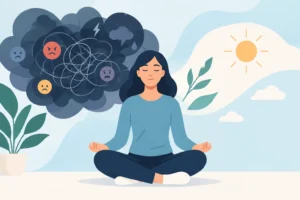
How to Heal From Emotional Exhaustion for Good

You can be functioning, replying to messages, showing up for work, caring for everyone else, and still feel completely empty inside. That is often the hardest part of emotional exhaustion: from the outside, your life may look normal. But internally, even small decisions feel heavy, joy feels far away, and rest never seems to touch the tiredness. To heal from emotional exhaustion, you need more than a day off. You need to stop living in a pattern that keeps draining you.

This is not a failure of strength. In fact, emotional exhaustion often happens to people who have been strong for too long. You have carried the pressure, pushed through the hard days, and convinced yourself you would deal with your needs later. Healing begins when you decide that later is now.

What Emotional Exhaustion Is Trying to Tell You

Emotional exhaustion is the feeling of being mentally and emotionally spent after sustained stress, responsibility, conflict, uncertainty, or self-pressure. It can build slowly. You may not notice it until you become unusually impatient, disconnected from people you love, unable to focus, or overwhelmed by tasks you once handled easily.

It is your mind and body sending a clear message: the way you have been coping is no longer sustainable. That message deserves respect, not shame.

You might recognize emotional exhaustion when you experience several of these patterns:

  • You wake up tired, even after getting enough sleep.
  • You feel numb, irritable, tearful, or emotionally distant.
  • Simple choices and ordinary tasks feel unusually difficult.
  • You keep giving to others while resenting that no one notices your needs.
  • You criticize yourself for slowing down, then push harder and feel worse.

These signs do not mean you are broken. They mean your internal resources need rebuilding. And rebuilding is possible, one honest choice at a time.

How to Heal From Emotional Exhaustion at the Root

A weekend of sleep can help, but it will not fully heal a life built around constant overextension. Lasting recovery asks you to look at both your energy and the beliefs that have taught you to spend it without limits.

Stop calling survival your normal

Many people live in reaction mode for so long that urgency starts to feel productive. You answer every call, solve every problem, say yes before checking your capacity, and measure your worth by how much you can endure. Then slowing down can feel uncomfortable, even dangerous.

Pause and ask yourself: What am I carrying that was never mine to carry? What would happen if I did less, not forever, but for this week?

This is not permission to abandon your responsibilities. It is permission to stop treating every responsibility as equally urgent. Some things need your attention. Some things need a boundary. Some things need to wait.

Protect your energy before you try to increase it

When you are depleted, adding more self-improvement tasks can become another burden. You do not need an intense new routine. You need fewer energy leaks.

Look closely at the moments that leave you emotionally flat. It may be a relationship where you constantly manage another person’s feelings. It may be doom-scrolling late at night, work expectations that have no clear limits, or the inner voice that tells you nothing you do is enough.

Choose one boundary that gives you room to breathe. It could be putting your phone away for the first hour after work, declining one nonessential commitment, or saying, “I can’t take that on right now.” A boundary may feel unfamiliar at first. That does not make it selfish. It makes it necessary.

Give your feelings somewhere safe to go

Emotional exhaustion is often the result of emotions that have been postponed, minimized, or swallowed to keep the peace. You may tell yourself you should be grateful, tougher, or over it by now. But feelings that are ignored do not disappear. They often show up as tension, numbness, procrastination, anger, and fatigue.

Create a small daily release valve. Spend ten minutes writing without editing. Take a walk without a podcast and let your thoughts surface. Sit quietly after a guided meditation and notice what you have been avoiding. Let yourself say the true sentence: “I am hurt.” “I am scared.” “I am tired of doing this alone.”

Naming what is real can be deeply relieving. You do not have to solve every feeling immediately. You only have to stop pretending it is not there.

Rebuild Self-Trust Through Small Promises

When you feel exhausted, grand plans can backfire. You promise yourself a total reset, miss a day, and use that moment as evidence that you cannot change. That cycle drains confidence even further.

Instead, make your next promise small enough to keep. Drink water before coffee. Step outside for five minutes. Go to bed 20 minutes earlier. Take three slow breaths before replying to a difficult message. These actions may sound simple, but they carry a powerful message: I listen to myself. I follow through for myself.

Self-trust is not created by waiting for motivation. It is built through repeated proof that you will not abandon yourself when life gets hard.

There is a trade-off here. Healing may require you to disappoint people who benefited from your constant availability. It may mean accepting that your home is not perfectly organized, your inbox is not empty, or your progress is not visible to anyone else. Choose your peace anyway. Your energy is not an unlimited resource, and protecting it is part of building the life you want.

Let Rest Be Active Recovery

Rest is not only sleep, although sleep matters. Rest is anything that helps your nervous system receive the signal that it does not have to stay on alert.

For one person, that may be a quiet morning, a slow workout, music, prayer, time in nature, or a conversation with someone who does not demand a performance. For another, it may mean taking a break from alcohol, reducing social media, or spending less time around people who leave them feeling small.

Pay attention to the difference between numbing and restoring. Numbing gives temporary escape but often leaves you more depleted afterward. Restoration may be quieter. It may not give an instant rush, but it helps you return to yourself.

Try creating a simple recovery rhythm instead of waiting for a perfect free day. Protect a few minutes in the morning to set your intention. Take a brief pause in the middle of your day to check your tension level. End the evening with something that tells your mind the day is complete. Daily mindset guidance, journaling, or a short meditation can help make this rhythm easier to keep.

Change the Story That Keeps You Drained

Emotional exhaustion is not always caused only by what is happening around you. Sometimes it is fueled by the story running underneath it: “I have to do everything myself.” “If I rest, I will fall behind.” “My needs create problems.” “I cannot let anyone down.”

These beliefs may have helped you survive at one point. But survival beliefs are not always healthy life beliefs. Challenge them with a more supportive truth.

You can be responsible without carrying the whole world. You can be ambitious without destroying your peace. You can care deeply without losing yourself. You can ask for help without becoming a burden.

This is where real mindset change begins. Not with forced positivity, but with a new relationship to your own needs, limits, and worth. Total Mindshift teaches this kind of daily internal practice because transformation is not built from one inspiring moment. It is built when you repeatedly choose thoughts and actions that support the person you are becoming.

Know When You Need More Support

Personal practices are powerful, but you do not have to handle everything alone. If exhaustion is lasting for weeks, affecting your ability to work or care for yourself, or coming with persistent hopelessness, severe anxiety, panic, or thoughts of harming yourself, reach out to a licensed mental health professional or emergency support right away.

Getting support is not a sign that your mindset is weak. It is a strong, life-affirming decision. Coaching, therapy, medical care, trusted friends, and supportive community can each have a place. What helps most depends on what you are carrying.

You do not need to earn rest by reaching a breaking point. You do not need to wait until every part of life is under control before you treat yourself with care. Today, make one small decision that says your peace matters. Then make another tomorrow. That is how you begin to come back to yourself.

Leave a Comment

Social Media Success Agency
Scroll to Top

Fill Out Exercise

INTRODUCTION

This workbook is your private space for honest self-reflection. Take your time with each section. Write as much or as little as feels authentic to you. Your mentor will review your responses to better understand how to support you, but this is ultimately for your own growth and clarity.

Checkboxes

By signing below, I confirm my commitment to this life audit process:

Looking at your scores:

  • - Which area surprised you (higher or lower than expected)?
  • - Which low score bothers you the most?
  • - Which high score are you most grateful for?
  • PRACTICAL PREPARATION
    Checkboxes

    SUBMISSION NOTES Before submitting, ensure you have:

  • 1- Completed all sections
  • 2- Been honest in your responses
  • 3- Saved a copy for yourself
  • 4- Named the file correctly
  • Thank you for your openness and commitment. Your mentor will review this and provide feedback within 48 hours.

    INTRODUCTION

    This workbook will guide you through a detailed exploration of the 12 Life Domains. Take your time with each section. Be specific in your responses - vague answers lead to vague results.

    Before we dive deep, here are the 12 domains you'll be exploring:

    1. Professional Life & Career - Your work, skills, and professional identity
    2. Financial Wellness - Money mindset, habits, and security
    3. Physical Health - Body, energy, and vitality
    4. Mental & Emotional Wellbeing - Mindset, resilience, and inner peace
    5. Community – Friends and social connections
    6. Love & Partnership - Romantic life and intimacy
    7. Environment & Lifestyle - Daily routines and living space
    8. Purpose & Identity - Core values and life meaning
    9. Growth & Learning - Personal development and future vision
    10. Family Relationships – how you get on with parents, siblings etc.
    11. Hobbies – what you enjoy doing or would like to do
    12. Nutrition – your body’s fuel

    PART 4: PRIORITY SETTING

    Rank your domains by priority for improvement (1 = highest priority):

    Explain your top 3 priorities:

    SUBMISSION CHECKLIST
    Checkboxes

    INTRODUCTION

    This workbook guides you through a comprehensive examination of your professional life. Answer each question thoroughly - surface-level responses lead to surface-level insights.

    1. Describe your current professional situation:

    2. On a scale of 1-10, rate these aspects of your current work:

    3. Describe a typical workday from start to finish. How do you feel at each stage?

    4. What percentage of your work time is spent on: (Should total 100%)

    5. Complete these sentences

    1. List your last 3-5 positions and why you left each one

    Position 1

    Position 2

    Position 3

    Position 4

    Position 5

    5. What stories do you tell yourself about your career?

    5. What stories do you tell yourself about your career?

    1. What are your top 5 professional values?

    2. How well does your current work honour these values?

    2. What fears hold you back professionally?
    1. Based on everything above, what needs to change?
    SUBMISSION CHECKLIST
    Checkboxes

    INTRODUCTION

    This workbook explores your relationship with money - not just the numbers, but the beliefs, emotions, and patterns that drive your financial decisions. Answer honestly without judgment.

    1. When you think about money, what emotions come up?

    Complete these sentences:

    1. Growing up, money in my family was

    2. What did your parents/caregivers teach you about money through their words?

    3.What did they teach you through their actions?

    1. Do you know your exact: (Yes/No)

    3. Rate your financial health in these areas (1-10):

    4. What percentage of your income goes to (Should total 100%)

    5. Do you have:

    PART 4: SPENDING & EARNING PATTERNS

    1. What triggers you to spend money? (Check all that apply)
    4. How do you feel about your earning potential?
    2. Are you the one who: (Check all that apply)
    SUBMISSION CHECKLIST
    Checkboxes

    INTRODUCTION

    This workbook explores your relationship with your body and physical health. Approach each question with curiosity and compassion, not judgment. Your body is your lifelong partner - this is about understanding and supporting it better.

    1. Overall, how do you feel in your body right now? ( select one )
    4. What physical symptoms do you regularly experience? (Check all that apply)
    1. How would you describe your relationship with your body?
    1. How often do you engage in intentional movement/exercise?
    3. What prevents you from moving more? (Check all that apply)
    5. What's your relationship with exercise?

    PART 4: NUTRITION & NOURISHMENT

    3. What affects your sleep? (Check all that apply)
    4. How rested do you feel upon waking?
    How often do you listen to these signals?
    SUBMISSION CHECKLIST
    Checkboxes

    INTRODUCTION

    This workbook explores your inner world - your thoughts, emotions, and mental patterns. Approach each question with gentle curiosity. There's no judgment here, only understanding.

    1. How would you describe your typical mental state? (Circle all that apply)
    4. How do you typically handle difficult emotions?

    PART 3: THOUGHT PATTERNS

    1. What kind of self-talk dominates your mind?
    2. Common thoughts that run through your mind: (Check all that apply)
    3. How does stress manifest for you? (Check all that apply)
    4. Current coping strategies: (Check all you use)
    4. How often do you prioritize mental health?
    SUBMISSION CHECKLIST
    Checkboxes

    INTRODUCTION

    This workbook explores your social ecosystem - the relationships and connections that shape your life. Be honest about both the gifts and challenges in your relationships.

    2. Looking at your list:

    3. Rate the overall quality of your:

    1. In relationships, I tend to be the one who: (Check all that apply)
    2. What role do you typically play in groups?
    1. How would you describe your friendship circle?
    1. In relationships, are you better at:
    SUBMISSION CHECKLIST
    Checkboxes

    INTRODUCTION

    This workbook explores your intimate romantic world. Approach each question with honesty and compassion. Love is vulnerable territory - be gentle with yourself as you explore.

    1. My current relationship status:
    1. In relationships, I tend to: (Check primary pattern)
    4. Are you single because
    SUBMISSION CHECKLIST
    Checkboxes

    INTRODUCTION

    This workbook explores how your physical environment and daily lifestyle either support or hinder your wellbeing. Examine your spaces and routines with fresh eyes.

    2. What specific things in your environment bother you? (Check all that apply)

    Complete this declaration:

    SUBMISSION CHECKLIST
    Checkboxes

    INTRODUCTION

    This workbook explores the deepest questions: Who are you really? Why are you here? What matters most? Approach these questions with openness and patience. Your truth may surprise you.

    1. From this list, Check your top 10 values:
    SUBMISSION CHECKLIST
    Checkboxes

    INTRODUCTION

    This workbook explores your relationship with growth, learning, and personal evolution. Discover how you expand best and what's calling you forward.

    1. When faced with a challenge, my first thought is usually:
    2. My ideal learning environment includes:
    1. When something gets difficult, I typically:
    2. My relationship with failure is:
    1. What motivates you to grow? (Check all that apply)
    2. What stops you from growing? (Check all that apply)
    SUBMISSION CHECKLIST
    Checkboxes

    INTRODUCTION

    This workbook helps you identify patterns across all 12 domains and discover the root causes behind your challenges. Have your previous workbooks nearby for reference. (Some domains are outlined in the same workbook i.e., Relationships and Family, Physical Health and Nutrition, Environment and Lifestyle and Hobbies)

    1. I consistently tend to: (Check all that apply)
    3. My dominant emotional pattern is:

    (Create your own connections)

    SUBMISSION CHECKLIST
    Checkboxes

    INTRODUCTION

    This workbook synthesizes all your discoveries into a comprehensive Life Diagnosis. Be thorough and honest - this becomes your transformation roadmap.

    Trending
    SUBMISSION CHECKLIST
    Checkboxes

    INTRODUCTION

    This workbook guides you through creating your Life Architecture - the complete blueprint for your transformation. Build thoughtfully; this becomes your roadmap.

    1. Write 2-3 specific sentences about your transformed life:

    PROFESSIONAL LIFE & CAREER

    FINANCIAL WELLNESS

    PHYSICAL HEALTH

    MENTAL & EMOTIONAL WELLBEING

    RELATIONSHIPS & COMMUNITY

    LOVE & PARTNERSHIP

    ENVIRONMENT & LIFESTYLE

    PURPOSE & IDENTITY

    GROWTH & LEARNING

    MONTH 1-3 FOCUS:

    MONTH 4-6 FOCUS:

    MONTH 7-9 FOCUS

    MONTH 10-12 FOCUS:

    1. WHO I need on my team:

    2. WHAT resources I need:

    3. HOW I'll stay on track:

    MY NORTH STAR:

    MY IDENTITY SHIFT:

    MY TOP 3 PRIORITIES:

    MY FIRST 3 ACTIONS:

    This week I will:

    MY COMMITMENT:

    THE ARCHITECT'S DECLARATION

    SUBMISSION CHECKLIST
    Checkboxes