
Key Takeaways
- Stress often appears subtly—tight chest, racing thoughts, irritability, or mental fog—so people seek guided meditations for reachable relief.
- Guided meditation can quickly interrupt a stress spiral; you don’t need years of practice or perfect conditions—just a trusted voice, a few minutes, and willingness.
- Different meditation styles suit different stress: breathwork for a wired body, body scan for physical tension, visualization for a loud mind, loving‑kindness for emotional pain, mindfulness for racing thoughts.
- Practical formats—short emergency meditations, walking meditations, and sleep meditations—make stress relief usable in real situations and times of day.
- Make it a practice: pick one style, try it consistently (5–10 minutes daily or a week before switching), match timing to your needs, and choose methods that feel supportive rather than burdensome.
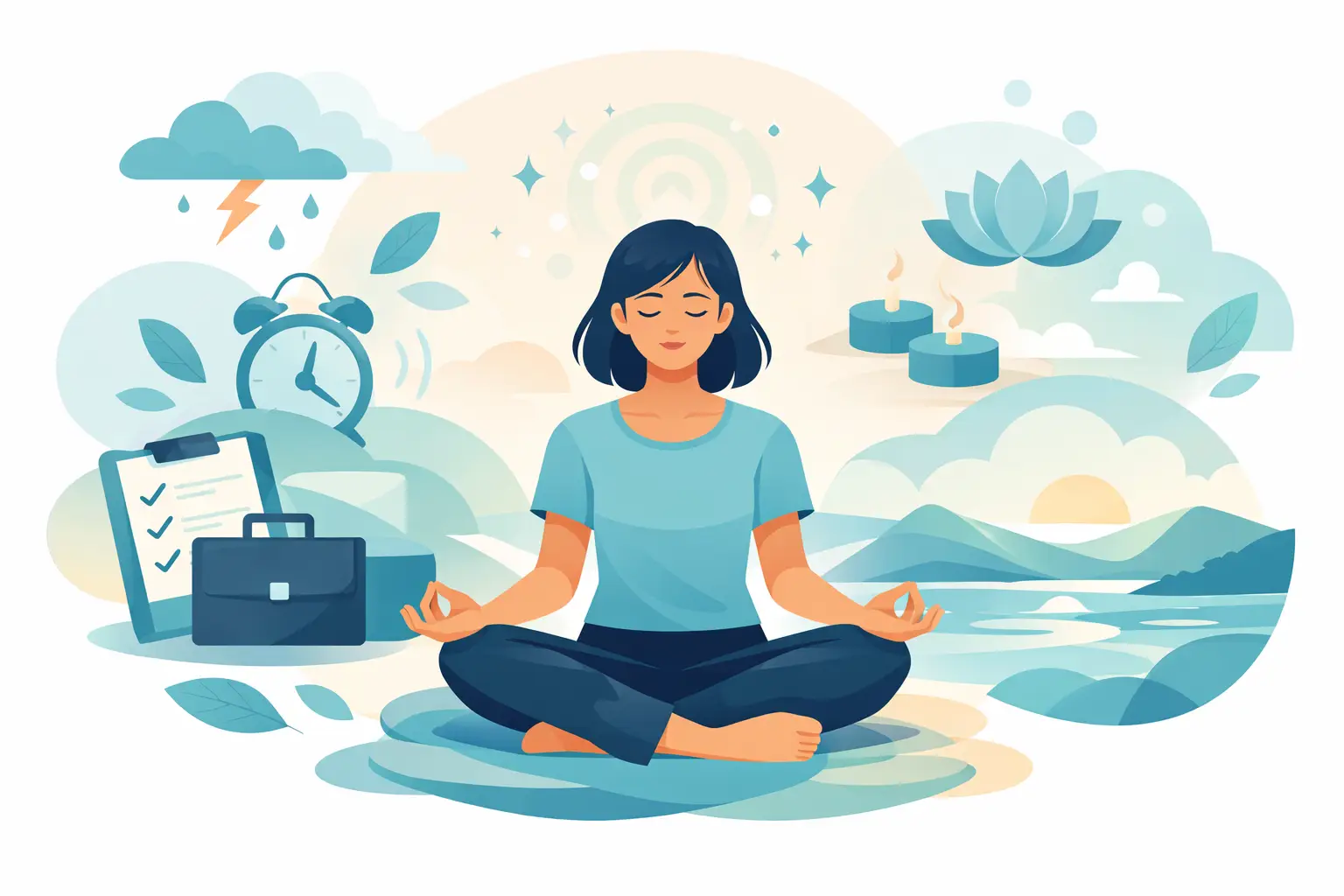
Stress rarely announces itself politely. It shows up as a tight chest before work, racing thoughts at 2 a.m., irritability with people you love, or that heavy mental fog that makes even simple tasks feel hard. That is why so many people search for the best guided meditations for stress – not because they want another wellness trend, but because they need relief that actually feels reachable.
Guided meditation can be one of the fastest ways to interrupt a stress spiral. You do not need years of practice, a perfectly quiet room, or a calm personality. You need a voice you trust, a few minutes of willingness, and the decision to stop letting stress run the show.
What makes the best guided meditations for stress work?
The most effective stress meditations do one simple thing well. They help your mind stop chasing every thought and give your nervous system a clear signal that it is safe to slow down.
That can happen in different ways. Some meditations use breath to steady your body. Others use body scans to release tension you have been carrying all day without noticing. Some work because they redirect your inner dialogue, especially when stress is fueled by fear, self-pressure, or overwhelm.
The truth is, there is no single best meditation for everyone. It depends on what your stress feels like. If your mind is loud and restless, a visualization may help more than silence. If your body feels wired, breathwork or progressive relaxation may give you quicker relief. If stress is tied to emotional pain, a compassionate meditation may land deeper than a highly structured one.
That is the real key. The best guided meditation is the one you will actually return to when life feels heavy.
10 best guided meditations for stress
1. Breath awareness meditation
If stress makes you feel scattered, start here. Breath awareness is simple, grounding, and effective because it brings your attention back to something steady. A guide will usually invite you to notice your inhale, lengthen your exhale, and return to the breath each time your mind wanders.
This style works well when you are overwhelmed but still able to sit still for a few minutes. It is less helpful if you are highly agitated and find focused breathing frustrating. In that case, a movement-based meditation might feel better first.
2. Body scan meditation
Stress often lives in the body before you even name it. Tight shoulders, clenched jaw, shallow breathing, stomach tension – all of it adds up. A body scan meditation walks you through each part of the body and helps you notice where you are gripping, bracing, or holding on.
This is one of the best options if your stress shows up physically. It is also powerful before bed because it helps you shift out of constant alert mode. If you tend to disconnect from your body, this practice can feel surprisingly emotional at first. That is not a sign it is not working. It usually means you are finally listening.
3. Progressive muscle relaxation
This is ideal for people who say, “I cannot relax,” while their whole body feels like a fist. In progressive muscle relaxation, you tense and release different muscle groups with the guidance of a calm voice. The contrast teaches your body what letting go actually feels like.
It is especially useful when stress feels physical rather than mental. It may not be the best fit during a work break or in public, since it requires a little more active participation than simply listening.
4. Sleep meditations for nighttime stress
When stress follows you into bed, standard meditation can feel too alert. Sleep meditations are designed differently. The voice is softer, the pace is slower, and the goal is not deep focus. The goal is to help your system settle enough to drift.
These meditations often combine breathing, gentle imagery, and reassurance. They are a smart choice for people whose stress peaks at night through overthinking, replaying conversations, or worrying about tomorrow. The trade-off is that they are not always the best choice for daytime resilience, since they are built to quiet you down rather than strengthen focus.
5. Visualization meditation
If your mind responds well to imagery, visualization can be a powerful reset. A guide might lead you to imagine a peaceful place, a protective light, or a safe inner space where your body can stop bracing.
This style helps when stress is fueled by mental chaos. It gives the mind somewhere constructive to go instead of letting it spiral. Not everyone connects with imagery, though. If it feels forced or cheesy to you, do not force it. Choose a style that feels natural.
6. Loving-kindness meditation
Some stress comes from pressure. Some comes from pain. And some comes from the way you speak to yourself when life feels hard. Loving-kindness meditation shifts that inner atmosphere. Instead of feeding fear and criticism, you practice phrases of compassion toward yourself and others.
This can be deeply healing if stress is mixed with burnout, sadness, resentment, or emotional exhaustion. It may feel uncomfortable if you are used to driving yourself through pressure. Stay with it. Sometimes the stress is not just from life. Sometimes it is from carrying life without any inner support.
7. Mindfulness meditation for racing thoughts
This is one of the most recognized styles, and for good reason. A mindfulness meditation teaches you to observe thoughts without getting dragged by them. You notice what is happening, return to the present moment, and build space between you and the noise.
For people under constant mental pressure, this is one of the best guided meditations for stress because it changes your relationship with your thoughts. It does take practice. If you expect your mind to go blank, you may feel discouraged. That is not the goal. The win is noticing the chaos without becoming it.
8. Walking meditation
Not everybody calms down by sitting still. If stress makes you restless, trapped, or irritable, walking meditation can be a better entry point. The guide may ask you to notice your steps, your breathing, and the feeling of movement through the body.
This is a practical option for busy people who struggle to carve out formal quiet time. It is also excellent for midday stress, especially when you need a reset but do not want to feel sleepy afterward.
9. Affirmation-based meditation
When stress is rooted in fear, self-doubt, or the feeling that you are losing control, affirmation meditations can help steady your mindset. A guide uses repeated phrases such as “I am safe,” “I can handle this,” or “I release what I cannot control.”
These meditations are not magic. They work best when the words feel believable enough to enter your nervous system, not when they sound disconnected from your reality. The right affirmation does not deny your struggle. It reminds you that you are stronger than the moment.
10. Short emergency meditations
Sometimes you do not have 20 minutes. You have three. You are in your car, in a bathroom stall, at your desk, or standing in the kitchen trying not to snap. That is where short emergency meditations matter.
These quick sessions usually focus on one immediate shift – slowing the breath, softening the shoulders, or grounding through the senses. They are not a full reset, but they can stop stress from taking over your next hour. For many people, this is where consistency begins.
How to choose the right one for your stress
Ask a better question than “What is the best meditation?” Ask, “What kind of stress am I carrying right now?” If your body feels tense, choose body-based practices. If your thoughts are racing, use mindfulness or breath awareness. If your stress feels emotional, try loving-kindness or affirmations.
It also helps to be honest about your personality. Some people want structure. Some want comfort. Some need a strong, steady voice that feels like a mentor saying, breathe, slow down, you are safe, keep going. If a meditation style irritates you, skip it. Relief should feel supportive, not like another thing you are failing at.
How to make guided meditation actually help
Meditation works best as a practice, not a rescue plan you only reach for after the breakdown. Even five to ten minutes a day can train your system to recover faster. You are not trying to become someone who never feels stress. You are becoming someone who does not stay trapped in it.
Start small. Pick one type of meditation and stay with it for a week before deciding it does not work. Use it at the same time each day if you can. Morning helps set the tone. Evening helps clear the weight of the day. Midday can save your energy before stress turns into emotional fallout.
If you are rebuilding your mind and habits from the inside out, guided audio support can be a game changer. That is one reason brands like Total Mindshift focus on practical, repeatable tools rather than just inspiration. Real change happens when calm becomes something you practice, not something you wait for.
Stress does not get the final word unless you keep handing it the microphone. A few quiet minutes, the right guidance, and a willingness to return to yourself can change the direction of your day – and eventually, the direction of your life.
If you want assistance with this article, please Contact Us
Latest Post

Build a Career Change Mindset That Moves You
October 23, 2026
No Comments
How to Manage Overwhelming Emotions Today
October 21, 2026
No Comments

7 Habits Supporting Lasting Behavior Change
October 19, 2026
No Comments