
Thought For The Week

"Most people pay more for what goes on their head, than what goes in it"

How to Regain Mental Energy When You Feel Drained
How to Regain Mental Energy When You Feel Drained

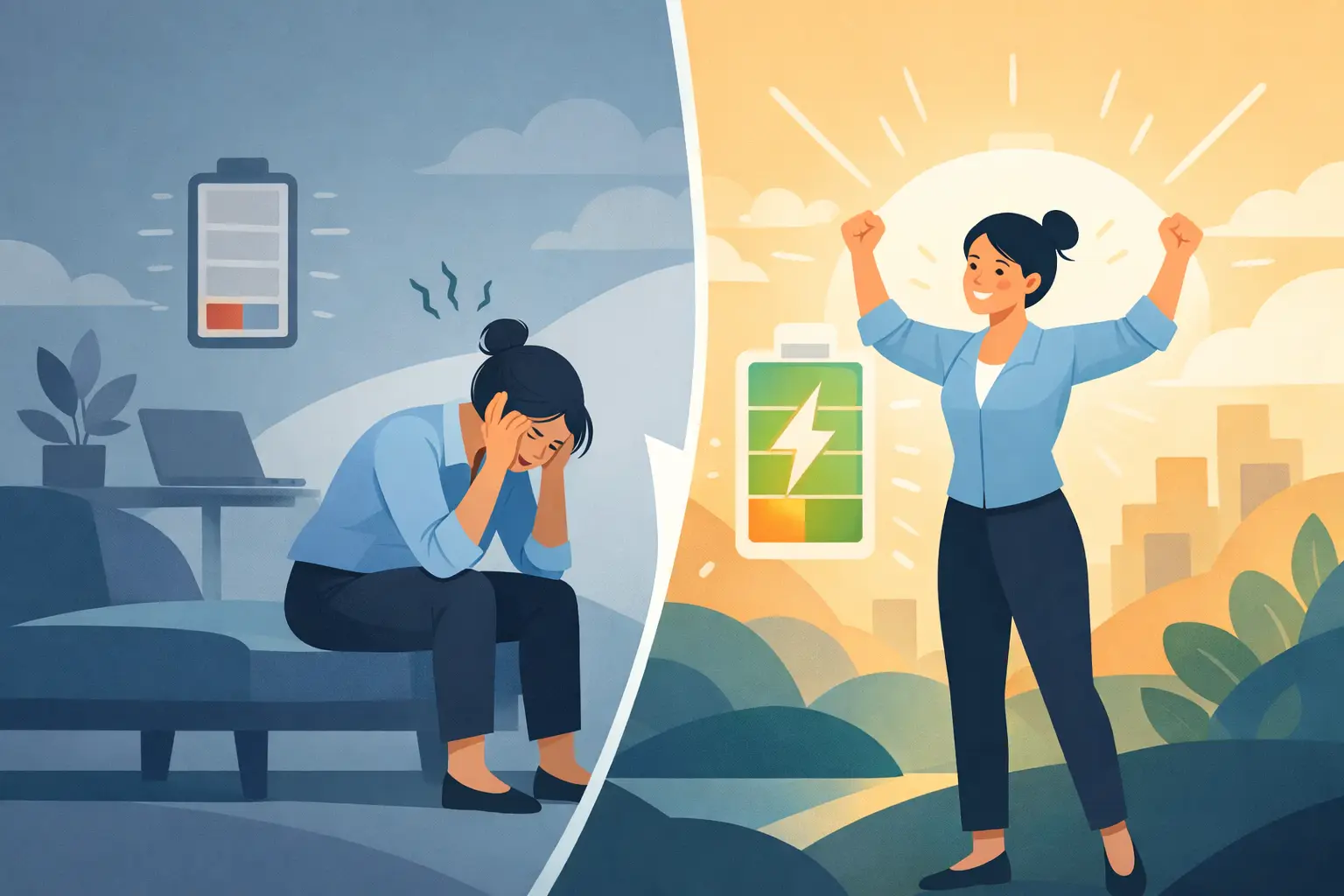
Your body can be sitting still while your mind has been running a marathon. You answer messages, make decisions, worry about what is next, replay what went wrong, and try to hold yourself together for everyone else. Then even a simple task feels heavy.

Learning how to regain mental energy starts with recognizing that you are not lazy, broken, or incapable. You are depleted. And depletion is not a character flaw. It is a signal that your mind needs recovery, direction, and a different way of carrying the pressure in your life.

You do not need to wait for a vacation, a perfect schedule, or a total life overhaul to feel better. Small, intentional shifts can help you interrupt the drain and begin rebuilding your strength today.

Mental Energy Is Spent in More Places Than You Think

Mental energy is the capacity to focus, regulate your emotions, make decisions, solve problems, and stay present. When it runs low, you may feel foggy, irritable, unmotivated, numb, or unusually sensitive. You might scroll for an hour because choosing the next useful step feels impossible.

Sleep matters, of course. So do food, movement, hydration, and physical health. But many people are exhausted even after a full night in bed because their mind never truly gets to stand down.

Constant notifications, unfinished tasks, financial stress, relationship tension, people-pleasing, and harsh self-talk all take their share. So does living out of alignment with what you really need. If you keep saying yes when your inner voice is asking for space, your mind pays the bill.

This is why mental recovery is not only about doing less. It is also about releasing what does not belong to you and choosing where your attention goes.

How to Regain Mental Energy by Stopping the Leak

Before you try to become more productive, identify what is draining you. A tired mind often needs fewer demands before it needs better discipline.

Take five quiet minutes and ask yourself: What has been taking up the most space in my head lately? Be honest. Maybe it is an unresolved conversation. Maybe it is a goal you keep avoiding because you are afraid to fail. Maybe it is the pressure to appear okay when you are not.

Naming the source does not solve everything instantly, but it turns a vague cloud into something you can face. You cannot direct energy well when you are pretending the drain is not there.

Then separate what needs action from what needs acceptance. If there is a bill to pay, a doctor appointment to make, or a difficult email to send, choose one clear next step. Action creates relief. If the issue is outside your control, practice returning your attention to the present instead of repeatedly trying to solve an unsolvable future.

Your mind does not need you to fix your entire life by tonight. It needs proof that you can lead yourself through one moment at a time.

Give Your Brain a Real Reset, Not Just a Distraction

Distraction can be useful in small doses, but it is not always restoration. Watching videos while checking messages and thinking about tomorrow may numb your mind for a while, yet leave you just as scattered afterward.

A real reset lowers stimulation and helps your nervous system recognize that it is safe to come out of high alert. This can be surprisingly simple. Step outside without your phone. Sit in your car for three quiet minutes before walking into the house. Take a shower without playing anything in the background. Breathe slowly enough that your exhale is longer than your inhale.

The goal is not to force peace. The goal is to stop feeding the noise.

If sitting quietly makes you restless, use gentle movement instead. Walk around the block, stretch, clean one small surface, or put on music and move your body for one song. The right reset depends on what kind of tired you are. A mentally overstimulated person may need silence. A person who feels frozen or low may need movement and daylight.

Reduce Decision Fatigue With Simple Defaults

Every decision uses energy. What should I eat? When should I work out? Should I answer this message? What should I wear? None of these choices seem huge alone, but a day full of tiny decisions can leave you with nothing left for what truly matters.

Create a few defaults that support you when your motivation is low. Keep easy meals available. Choose a consistent time for a walk. Make a short list of tasks that always move your life forward, such as drinking water, showering, making your bed, or spending ten minutes on the task you have been avoiding.

This is not about making life rigid. It is about making room for your energy to go toward healing, creativity, connection, and meaningful progress rather than constant mental negotiation.

When you are depleted, simplify the standard. A basic meal is better than skipping food. A ten-minute workout is better than waiting for an hour of motivation. A short honest reply is better than carrying the weight of a message you are avoiding.

Protect Your Attention Like It Is Valuable

Because it is.

Your attention is one of the most powerful resources you have. Wherever it goes, your emotional state often follows. If your first and last habit each day is absorbing other people’s opinions, emergencies, and highlight reels, your mind never gets a chance to hear your own voice.

Try creating small boundaries around your inputs. Keep your phone away from your bed. Do not begin the morning with social media or work messages. Turn off nonessential notifications. Give yourself one block of time where you are not available to everyone.

You may feel uncomfortable at first, especially if you are used to being the dependable one. But being constantly reachable is not the same as being supportive. You are allowed to protect the mental space you need to be a healthier, steadier version of yourself.

Challenge the Thoughts That Keep You Exhausted

Some exhaustion comes from circumstances. Some comes from the story you repeat about those circumstances.

Thoughts like “I am behind,” “I should be doing more,” “Nothing ever changes,” or “I cannot handle this” can keep your nervous system activated all day. They may feel true because you have practiced them for so long. That does not make them useful or permanent.

When you catch one, do not shame yourself for having it. Pause and replace it with something honest but more empowering. Instead of “I am failing,” try, “I am struggling right now, and I can take one supportive step.” Instead of “I will never get through this,” try, “I do not have to see the whole path to take the next step.”

This is not fake positivity. It is mindset rewiring. You are teaching your mind to stop treating every hard season as proof that you are powerless.

At Total Mindshift, this kind of daily inner guidance is central to lasting change: not waiting for one dramatic breakthrough, but practicing thoughts and actions that build self-trust over time.

A 20-Minute Mental Energy Rescue Plan

When your mind feels overloaded, do not ask yourself to perform at your best. Give yourself a short recovery window. For the next 20 minutes, try this:

  • Spend five minutes drinking water, taking slow breaths, and stepping away from screens.
  • Spend five minutes writing down every thought, task, and worry competing for your attention.
  • Spend five minutes choosing one task that would create the most relief if it were started.
  • Spend five minutes doing only the first small part of that task.

You may not finish the problem. That is not the point. You are breaking the cycle of overwhelm, avoidance, and guilt. Momentum is mental energy in motion.

Build a Life That Does Not Constantly Drain You

Quick resets help, but repeated exhaustion is also information. If you are always running on empty, look at the patterns around you. Are you overscheduling? Are you carrying responsibilities that need to be shared? Are you using every quiet moment to catch up instead of recover? Are you setting goals that inspire you, or goals that only prove your worth to someone else?

Change may require difficult choices. You may need to disappoint someone, ask for help, get more sleep, seek professional support, or slow down before your body forces you to. If persistent fatigue comes with major changes in mood, sleep, concentration, or physical health, speak with a qualified healthcare professional. Mindset tools are powerful, and they work best alongside appropriate care.

Your mental energy will grow when your daily life begins to reflect the truth that you matter too. You are not here only to survive your responsibilities. You are here to feel present in your own life.

Start gently, but start now. Put one hand on your heart, take one slower breath, and choose one action that tells your mind: I am listening. That small act of self-leadership can be the moment you begin finding your way back to yourself.

Leave a Comment

Social Media Success Agency
Scroll to Top

Fill Out Exercise

INTRODUCTION

This workbook is your private space for honest self-reflection. Take your time with each section. Write as much or as little as feels authentic to you. Your mentor will review your responses to better understand how to support you, but this is ultimately for your own growth and clarity.

Checkboxes

By signing below, I confirm my commitment to this life audit process:

Looking at your scores:

  • - Which area surprised you (higher or lower than expected)?
  • - Which low score bothers you the most?
  • - Which high score are you most grateful for?
  • PRACTICAL PREPARATION
    Checkboxes

    SUBMISSION NOTES Before submitting, ensure you have:

  • 1- Completed all sections
  • 2- Been honest in your responses
  • 3- Saved a copy for yourself
  • 4- Named the file correctly
  • Thank you for your openness and commitment. Your mentor will review this and provide feedback within 48 hours.

    INTRODUCTION

    This workbook will guide you through a detailed exploration of the 12 Life Domains. Take your time with each section. Be specific in your responses - vague answers lead to vague results.

    Before we dive deep, here are the 12 domains you'll be exploring:

    1. Professional Life & Career - Your work, skills, and professional identity
    2. Financial Wellness - Money mindset, habits, and security
    3. Physical Health - Body, energy, and vitality
    4. Mental & Emotional Wellbeing - Mindset, resilience, and inner peace
    5. Community – Friends and social connections
    6. Love & Partnership - Romantic life and intimacy
    7. Environment & Lifestyle - Daily routines and living space
    8. Purpose & Identity - Core values and life meaning
    9. Growth & Learning - Personal development and future vision
    10. Family Relationships – how you get on with parents, siblings etc.
    11. Hobbies – what you enjoy doing or would like to do
    12. Nutrition – your body’s fuel

    PART 4: PRIORITY SETTING

    Rank your domains by priority for improvement (1 = highest priority):

    Explain your top 3 priorities:

    SUBMISSION CHECKLIST
    Checkboxes

    INTRODUCTION

    This workbook guides you through a comprehensive examination of your professional life. Answer each question thoroughly - surface-level responses lead to surface-level insights.

    1. Describe your current professional situation:

    2. On a scale of 1-10, rate these aspects of your current work:

    3. Describe a typical workday from start to finish. How do you feel at each stage?

    4. What percentage of your work time is spent on: (Should total 100%)

    5. Complete these sentences

    1. List your last 3-5 positions and why you left each one

    Position 1

    Position 2

    Position 3

    Position 4

    Position 5

    5. What stories do you tell yourself about your career?

    5. What stories do you tell yourself about your career?

    1. What are your top 5 professional values?

    2. How well does your current work honour these values?

    2. What fears hold you back professionally?
    1. Based on everything above, what needs to change?
    SUBMISSION CHECKLIST
    Checkboxes

    INTRODUCTION

    This workbook explores your relationship with money - not just the numbers, but the beliefs, emotions, and patterns that drive your financial decisions. Answer honestly without judgment.

    1. When you think about money, what emotions come up?

    Complete these sentences:

    1. Growing up, money in my family was

    2. What did your parents/caregivers teach you about money through their words?

    3.What did they teach you through their actions?

    1. Do you know your exact: (Yes/No)

    3. Rate your financial health in these areas (1-10):

    4. What percentage of your income goes to (Should total 100%)

    5. Do you have:

    PART 4: SPENDING & EARNING PATTERNS

    1. What triggers you to spend money? (Check all that apply)
    4. How do you feel about your earning potential?
    2. Are you the one who: (Check all that apply)
    SUBMISSION CHECKLIST
    Checkboxes

    INTRODUCTION

    This workbook explores your relationship with your body and physical health. Approach each question with curiosity and compassion, not judgment. Your body is your lifelong partner - this is about understanding and supporting it better.

    1. Overall, how do you feel in your body right now? ( select one )
    4. What physical symptoms do you regularly experience? (Check all that apply)
    1. How would you describe your relationship with your body?
    1. How often do you engage in intentional movement/exercise?
    3. What prevents you from moving more? (Check all that apply)
    5. What's your relationship with exercise?

    PART 4: NUTRITION & NOURISHMENT

    3. What affects your sleep? (Check all that apply)
    4. How rested do you feel upon waking?
    How often do you listen to these signals?
    SUBMISSION CHECKLIST
    Checkboxes

    INTRODUCTION

    This workbook explores your inner world - your thoughts, emotions, and mental patterns. Approach each question with gentle curiosity. There's no judgment here, only understanding.

    1. How would you describe your typical mental state? (Circle all that apply)
    4. How do you typically handle difficult emotions?

    PART 3: THOUGHT PATTERNS

    1. What kind of self-talk dominates your mind?
    2. Common thoughts that run through your mind: (Check all that apply)
    3. How does stress manifest for you? (Check all that apply)
    4. Current coping strategies: (Check all you use)
    4. How often do you prioritize mental health?
    SUBMISSION CHECKLIST
    Checkboxes

    INTRODUCTION

    This workbook explores your social ecosystem - the relationships and connections that shape your life. Be honest about both the gifts and challenges in your relationships.

    2. Looking at your list:

    3. Rate the overall quality of your:

    1. In relationships, I tend to be the one who: (Check all that apply)
    2. What role do you typically play in groups?
    1. How would you describe your friendship circle?
    1. In relationships, are you better at:
    SUBMISSION CHECKLIST
    Checkboxes

    INTRODUCTION

    This workbook explores your intimate romantic world. Approach each question with honesty and compassion. Love is vulnerable territory - be gentle with yourself as you explore.

    1. My current relationship status:
    1. In relationships, I tend to: (Check primary pattern)
    4. Are you single because
    SUBMISSION CHECKLIST
    Checkboxes

    INTRODUCTION

    This workbook explores how your physical environment and daily lifestyle either support or hinder your wellbeing. Examine your spaces and routines with fresh eyes.

    2. What specific things in your environment bother you? (Check all that apply)

    Complete this declaration:

    SUBMISSION CHECKLIST
    Checkboxes

    INTRODUCTION

    This workbook explores the deepest questions: Who are you really? Why are you here? What matters most? Approach these questions with openness and patience. Your truth may surprise you.

    1. From this list, Check your top 10 values:
    SUBMISSION CHECKLIST
    Checkboxes

    INTRODUCTION

    This workbook explores your relationship with growth, learning, and personal evolution. Discover how you expand best and what's calling you forward.

    1. When faced with a challenge, my first thought is usually:
    2. My ideal learning environment includes:
    1. When something gets difficult, I typically:
    2. My relationship with failure is:
    1. What motivates you to grow? (Check all that apply)
    2. What stops you from growing? (Check all that apply)
    SUBMISSION CHECKLIST
    Checkboxes

    INTRODUCTION

    This workbook helps you identify patterns across all 12 domains and discover the root causes behind your challenges. Have your previous workbooks nearby for reference. (Some domains are outlined in the same workbook i.e., Relationships and Family, Physical Health and Nutrition, Environment and Lifestyle and Hobbies)

    1. I consistently tend to: (Check all that apply)
    3. My dominant emotional pattern is:

    (Create your own connections)

    SUBMISSION CHECKLIST
    Checkboxes

    INTRODUCTION

    This workbook synthesizes all your discoveries into a comprehensive Life Diagnosis. Be thorough and honest - this becomes your transformation roadmap.

    Trending
    SUBMISSION CHECKLIST
    Checkboxes

    INTRODUCTION

    This workbook guides you through creating your Life Architecture - the complete blueprint for your transformation. Build thoughtfully; this becomes your roadmap.

    1. Write 2-3 specific sentences about your transformed life:

    PROFESSIONAL LIFE & CAREER

    FINANCIAL WELLNESS

    PHYSICAL HEALTH

    MENTAL & EMOTIONAL WELLBEING

    RELATIONSHIPS & COMMUNITY

    LOVE & PARTNERSHIP

    ENVIRONMENT & LIFESTYLE

    PURPOSE & IDENTITY

    GROWTH & LEARNING

    MONTH 1-3 FOCUS:

    MONTH 4-6 FOCUS:

    MONTH 7-9 FOCUS

    MONTH 10-12 FOCUS:

    1. WHO I need on my team:

    2. WHAT resources I need:

    3. HOW I'll stay on track:

    MY NORTH STAR:

    MY IDENTITY SHIFT:

    MY TOP 3 PRIORITIES:

    MY FIRST 3 ACTIONS:

    This week I will:

    MY COMMITMENT:

    THE ARCHITECT'S DECLARATION

    SUBMISSION CHECKLIST
    Checkboxes