
Key Takeaways
- Feeling stuck is rarely laziness or moral failure—instead it’s a signal that you’re overwhelmed, disconnected, afraid, or mentally overloaded, not your identity.
- Stuckness usually builds gradually from small disappointments, fear, self-doubt, avoidance, mental exhaustion, or carrying an old identity that conflicts with who you want to become.
- Hidden drivers include overload (too much internal noise), loss of connection to your true values, quiet fear (perfectionism, endless planning), and habits that reinforce your current self-image.
- To move again: stop self-blame, shrink the scale to small daily actions, name the specific type of stuck you’re in, change the inputs shaping your mind, practice daily mindset work, and seek support when needed.
- Seasons of stuckness can teach you where you’ve abandoned yourself or are in a draining environment; the aim is to learn to respond earlier, rebuild slowly, and develop tools, structure, and inner leadership.
Some people call it procrastination. Some call it burnout. Some call it a bad season. But if you keep asking, why do I feel stuck, you already know this goes deeper than being lazy or unmotivated. It feels like you want change, need change, maybe even pray for change – yet somehow you keep waking up inside the same patterns.
That feeling can be frustrating, embarrassing, and exhausting. You start wondering what is wrong with you. The truth is, usually nothing is wrong with you. You are not broken. You are more likely overwhelmed, disconnected, afraid, mentally overloaded, or stuck in loops that have been running so long they feel like your personality.
The good news is this: stuck is not your identity. It is a signal. And signals can be read.
Why Do I Feel Stuck? It Usually Isn’t Just One Thing
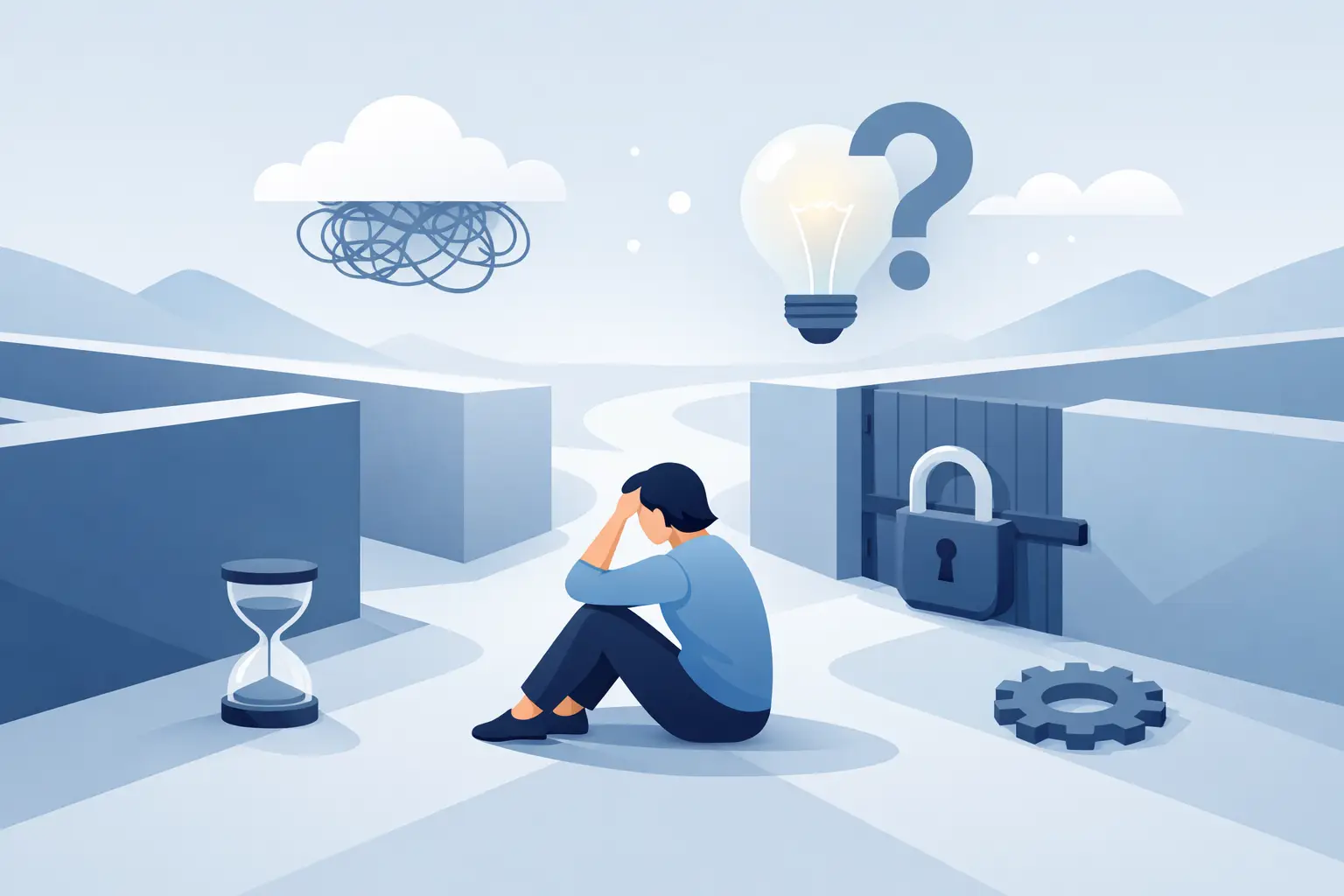
Feeling stuck rarely comes from one dramatic cause. More often, it grows quietly. A little disappointment. A little fear. A little self-doubt. A little avoidance. Then one day you look around and realize you have been standing still for months, maybe years.
Sometimes you are stuck because you are mentally exhausted. When your mind is overloaded, even simple decisions feel heavy. You tell yourself you need to get it together, but your nervous system is asking for safety, rest, and space.
Sometimes you are stuck because you are trying to move forward while carrying an old identity. You want new habits, new confidence, new results, but deep down you still see yourself as the person who always quits, always struggles, always falls back. That inner story matters more than most people realize.
And sometimes you are stuck because part of you is protecting you. If change once led to rejection, failure, chaos, or loss, your mind may associate progress with danger. So you hesitate. You delay. You numb out. Not because you do not care, but because your system is trying to keep you safe in the only way it knows.
The Hidden Reasons You Feel Unable to Move
You are overwhelmed, not weak
A lot of people shame themselves for not taking action when the real issue is overload. Too many decisions. Too much emotional weight. Too many unfinished thoughts. When your mind is crowded, clarity disappears.
This is why forcing yourself harder does not always work. Push can help for a day or two, but if the root issue is overwhelm, more pressure often creates more paralysis. What you need first is less internal noise.
You have lost connection with what you actually want
It is hard to move with power when you are chasing goals that do not feel real to you. Maybe you built your life around survival, approval, or responsibility. Maybe you have been so busy keeping everything together that you have not stopped to ask what would actually make you feel alive.
When your actions are disconnected from your real values, life starts to feel flat. You can be productive and still feel stuck. That is one of the hardest truths to face.
Fear is running quietly in the background
Fear does not always look dramatic. Sometimes it looks like perfectionism. Sometimes it looks like constant planning. Sometimes it looks like waiting until you feel ready.
If you are always preparing but rarely beginning, fear may be in charge. If you keep telling yourself next week, next month, after I fix this, after I feel better, fear may be writing the script.
Your habits are reinforcing your current identity
Every day you repeat a thought, a reaction, or a behavior, you teach your brain what is normal. If your routine is feeding distraction, negativity, comparison, and inconsistency, your life will keep reflecting that pattern.
This is not a reason to judge yourself. It is a reason to wake up. Small repeated actions shape self-image. If you keep proving to yourself that you do not follow through, your confidence drops. If you start proving that you can keep one promise a day, your identity begins to shift.
Why Do I Feel Stuck Even When I Want More?
Because wanting more is not always enough. Desire matters, but direction, emotional safety, and repetition matter too.
A lot of people think change should happen the moment they get fed up enough. Sometimes that does create a breakthrough. But often, real transformation is less dramatic and more deliberate. You do not just need motivation. You need a new mental environment.
That means paying attention to what you listen to, what you say to yourself, what you expect from yourself, and what you do when discomfort shows up. If your inner world keeps pulling you back to the familiar, your outer life will keep repeating itself.
This is where many people get discouraged. They think, I know what to do, so why am I not doing it? The answer is often that knowledge is not the missing piece. Consistent inner rewiring is.
How to Start Moving Again Without Overwhelming Yourself
The first step is to stop making stuck mean hopeless. Feeling stuck is information. It tells you that something in your current pattern is no longer working. That awareness can become the beginning of your next chapter if you respond with honesty instead of self-attack.
Start by shrinking the scale. When people feel trapped, they often think they need a huge life overhaul. Sometimes they do need major change, but major change is usually built through smaller honest moves. Ask yourself, what is one action that would make me feel more in control today? Not this year. Today.
It might be getting out of bed when you said you would. It might be going for a ten-minute walk. It might be turning off the noise and sitting alone long enough to hear your own thoughts. Momentum is powerful, but it usually begins in very ordinary moments.
It also helps to name what kind of stuck you are in. Is this emotional exhaustion? Fear of failure? Fear of success? A lack of structure? A life that no longer fits who you are becoming? The more specific you get, the less helpless you feel.
Then get honest about the inputs shaping your mind. If your days are filled with negative self-talk, chaotic routines, and mental clutter, your results will reflect that. Changing your state often starts with changing what you repeatedly feed your attention. This is why daily mindset work matters. Not once in a while. Daily. Lasting change is built by repetition.
If you need support, get support. There is strength in being guided when your own mind has become a maze. You do not have to solve every internal block alone. Sometimes the fastest way forward is to stop isolating and let someone help you rebuild your thinking step by step.
What Feeling Stuck Might Be Trying to Teach You
Sometimes this season is exposing where you have been abandoning yourself. Sometimes it is showing you that your current environment is draining you. Sometimes it is forcing you to admit that the life you built from fear cannot carry the person you are trying to become.
That does not mean every stuck season is meaningful in a magical way. Some seasons are just painful and messy. But even then, there is still something to learn. Your patterns leave clues. Your resistance leaves clues. Your exhaustion leaves clues.
The goal is not to become someone who never feels stuck again. The goal is to become someone who knows how to respond when it happens. Someone who notices the drift earlier. Someone who interrupts the spiral faster. Someone who has tools, structure, and inner leadership. Its time to heal.
That is where real confidence comes from. Not from never struggling, but from knowing you can lead yourself through it.
If you have been asking, why do I feel stuck, let that question open a door instead of closing one. You may not need more shame. You may need a reset. You may need new patterns, new inputs, and a new level of honesty about what is keeping you where you are.
You are allowed to begin again without having all the answers. You are allowed to rebuild slowly. You are allowed to become a different person than the one who got lost in these patterns.
And if you keep going, even imperfectly, stuck can become the moment everything starts to change.
If you want assistance with this article, please Contact Us
Latest Post

Emotional Regulation Guide for Hard Days
October 25, 2026
No Comments

Build a Career Change Mindset That Moves You
October 23, 2026
No Comments
How to Manage Overwhelming Emotions Today
October 21, 2026
No Comments