

Thought For The Week

"Most people pay more for what goes on their head, than what goes in it"

Top Habits for Mental Strength You Can Build

Top Habits for Mental Strength You Can Build

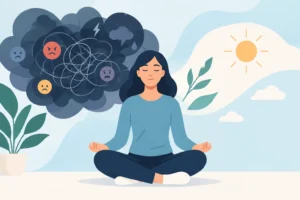
The hard moment is rarely the moment that breaks you. It is the story you repeat afterward: “I always mess this up.” “Nothing changes.” “I’m not strong enough.” The top habits for mental strength begin right there, in the space between what happens to you and what you decide it means.

Mental strength is not pretending you are fine when you are hurting. It is the ability to stay connected to yourself when life feels uncertain, emotional, unfair, or overwhelming. You can build it. Not through one huge breakthrough, but through small choices that teach your mind, day after day, that you can handle your life.

What Mental Strength Really Looks Like

A mentally strong person still feels fear, frustration, sadness, and doubt. The difference is that those feelings do not get to run the entire day. They can pause before reacting, tell themselves the truth, and take one useful step even when motivation is low.

This matters because your mind is always learning from repetition. Every time you avoid a difficult conversation, speak harshly to yourself, or abandon a promise you made to yourself, your brain receives a message. Every time you pause, reset, and follow through, it receives a different message: “I can trust myself.”

That trust is the foundation of confidence. It is also why mental strength is not built by waiting to feel ready. It is built by practicing a better response while you are still uncomfortable.

8 Top Habits for Mental Strength That Change Your Inner Life

1. Catch the thought before you obey it

Not every thought deserves your agreement. A tired, stressed, or discouraged mind can produce convincing lies: “This is pointless.” “They probably hate me.” “I’ll start next week.” If you treat every thought as a command, you hand your direction over to your mood.

Start asking a better question: “Is this thought true, useful, and helping me become who I want to be?” You do not need to force fake positivity. You simply need to stop giving automatic authority to your inner critic.

Try replacing “I can’t handle this” with “This is hard, and I can handle the next step.” That small shift does not deny the struggle. It puts you back in the driver’s seat.

2. Keep small promises to yourself

Self-belief is earned through evidence. If you constantly make grand plans and then disappear on yourself, you begin to expect disappointment from your own actions. That pattern drains motivation because part of you no longer believes your commitments mean anything.

Make the promise smaller. Drink a glass of water when you wake up. Take a ten-minute walk. Spend five minutes on the task you keep avoiding. Put your phone away at a time you choose.

The goal is not to impress anyone. The goal is to become someone whose word means something to you. Consistency in small things creates a form of inner safety that no outside approval can replace.

3. Let discomfort teach you instead of control you

Most self-sabotage is an attempt to escape discomfort. You scroll because you feel anxious. You quit because you feel exposed. You overeat, isolate, spend, argue, or procrastinate because you want relief now.

There is no shame in wanting relief. But immediate relief can become expensive when it repeatedly pulls you away from the life you want. Mental strength grows when you learn to sit with a feeling for a few extra minutes without turning it into an impulsive action.

When discomfort rises, name it plainly: “I feel rejected.” “I feel restless.” “I feel scared of failing.” Then breathe, slow down, and choose what will help your future self. The feeling may not vanish, but you will prove that it does not own you.

4. Protect your attention

Your attention is one of the most valuable things you possess. If it is consumed all day by bad news, comparison, conflict, and other people’s opinions, your mind has very little room left to hear your own wisdom.

This does not mean you need to disappear from the world or become rigid about your phone. It means you need boundaries that serve your peace. Notice what leaves you feeling weaker, more scattered, or more critical of your own life. Notice what leaves you clear, hopeful, and ready to act.

Create a few intentional spaces in your day with no noise. A quiet morning, a walk without a podcast, or ten minutes before bed without a screen can help your nervous system come down. Clarity often returns when you stop feeding the chaos.

5. Build a recovery ritual for difficult days

A difficult day does not have to become a difficult week. One of the strongest habits you can develop is knowing how to return to yourself after stress, conflict, a setback, or an emotional spiral.

Your recovery ritual can be simple: take a shower, journal one honest page, go outside, pray, meditate, clean one small area, or listen to guidance that brings you back to center. What matters is that you have a response ready before you hit the low point.

Do not wait until you are completely drained to decide how you will care for your mind. Create your reset plan while you are calm. Then use it without negotiating with yourself when life gets heavy.

6. Speak to yourself like someone worth rebuilding

You cannot shame yourself into a better life for long. Harsh self-talk may create a brief burst of pressure, but it usually leads to exhaustion, avoidance, or the feeling that you are never enough.

Compassion is not letting yourself off the hook. It is holding yourself accountable without becoming your own enemy. You can say, “I made a mistake, but I am going to repair it.” You can say, “I lost momentum, but I have not lost my chance.”

The voice you practice in private becomes the voice you hear under pressure. Make it honest. Make it firm. Make it kind enough that you can keep going.

7. Choose action before certainty

Many people stay stuck because they want a guarantee before they move. They want certainty that the job will work out, the relationship will last, the habit will stick, or the effort will be recognized. Life does not offer that kind of certainty.

What it can offer is information. Action gives you information. A conversation tells you where you stand. Applying teaches you what is possible. Starting the workout changes your energy. Asking for help shows you who is willing to support you.

You do not need to know the entire path. You need enough courage to take the next honest step. Momentum is often waiting on the other side of an action you have been overthinking.

8. Review your life without attacking yourself

Mental strength requires reflection, not rumination. Reflection asks, “What happened? What can I learn? What will I do differently?” Rumination asks, “Why am I like this?” and then circles the same pain without creating a way forward.

At the end of the day, take a few minutes to check in. Where did you show strength? Where did you abandon yourself? What do you need tomorrow? This practice helps you recognize patterns before they become your identity.

Be specific. If you snapped at someone, acknowledge it and choose repair. If you avoided a task, identify the emotion underneath it. If you followed through when no one was watching, let yourself feel proud. Growth becomes real when you are willing to see yourself clearly and still believe in your ability to change.

Build Strength Through Repetition, Not Pressure

You do not need to practice every habit perfectly. In fact, trying to overhaul your whole life by Monday is often another version of self-pressure. Choose one habit that speaks directly to the struggle you are carrying right now.

If your mind feels loud, protect your attention. If you feel unreliable, keep one small promise. If fear has kept you frozen, take one action before certainty arrives. Let your progress be steady enough to survive real life.

At Total Mindshift, the focus is not on collecting more motivational ideas. It is on helping you rehearse the thoughts and actions that create a new internal standard. Your mind can be trained to look for possibility, return to calm, and move forward even after a setback.

You are not behind because you are struggling. You are being invited to build a stronger relationship with yourself. Today, choose one promise you can keep, one thought you can question, and one next step you can take. That is how you begin to set yourself free.

Leave a Comment

Social Media Success Agency
Scroll to Top

Fill Out Exercise

INTRODUCTION

This workbook is your private space for honest self-reflection. Take your time with each section. Write as much or as little as feels authentic to you. Your mentor will review your responses to better understand how to support you, but this is ultimately for your own growth and clarity.

Checkboxes

By signing below, I confirm my commitment to this life audit process:

Looking at your scores:

  • - Which area surprised you (higher or lower than expected)?
  • - Which low score bothers you the most?
  • - Which high score are you most grateful for?
  • PRACTICAL PREPARATION
    Checkboxes

    SUBMISSION NOTES Before submitting, ensure you have:

  • 1- Completed all sections
  • 2- Been honest in your responses
  • 3- Saved a copy for yourself
  • 4- Named the file correctly
  • Thank you for your openness and commitment. Your mentor will review this and provide feedback within 48 hours.

    INTRODUCTION

    This workbook will guide you through a detailed exploration of the 12 Life Domains. Take your time with each section. Be specific in your responses - vague answers lead to vague results.

    Before we dive deep, here are the 12 domains you'll be exploring:

    1. Professional Life & Career - Your work, skills, and professional identity
    2. Financial Wellness - Money mindset, habits, and security
    3. Physical Health - Body, energy, and vitality
    4. Mental & Emotional Wellbeing - Mindset, resilience, and inner peace
    5. Community – Friends and social connections
    6. Love & Partnership - Romantic life and intimacy
    7. Environment & Lifestyle - Daily routines and living space
    8. Purpose & Identity - Core values and life meaning
    9. Growth & Learning - Personal development and future vision
    10. Family Relationships – how you get on with parents, siblings etc.
    11. Hobbies – what you enjoy doing or would like to do
    12. Nutrition – your body’s fuel

    PART 4: PRIORITY SETTING

    Rank your domains by priority for improvement (1 = highest priority):

    Explain your top 3 priorities:

    SUBMISSION CHECKLIST
    Checkboxes

    INTRODUCTION

    This workbook guides you through a comprehensive examination of your professional life. Answer each question thoroughly - surface-level responses lead to surface-level insights.

    1. Describe your current professional situation:

    2. On a scale of 1-10, rate these aspects of your current work:

    3. Describe a typical workday from start to finish. How do you feel at each stage?

    4. What percentage of your work time is spent on: (Should total 100%)

    5. Complete these sentences

    1. List your last 3-5 positions and why you left each one

    Position 1

    Position 2

    Position 3

    Position 4

    Position 5

    5. What stories do you tell yourself about your career?

    5. What stories do you tell yourself about your career?

    1. What are your top 5 professional values?

    2. How well does your current work honour these values?

    2. What fears hold you back professionally?
    1. Based on everything above, what needs to change?
    SUBMISSION CHECKLIST
    Checkboxes

    INTRODUCTION

    This workbook explores your relationship with money - not just the numbers, but the beliefs, emotions, and patterns that drive your financial decisions. Answer honestly without judgment.

    1. When you think about money, what emotions come up?

    Complete these sentences:

    1. Growing up, money in my family was

    2. What did your parents/caregivers teach you about money through their words?

    3.What did they teach you through their actions?

    1. Do you know your exact: (Yes/No)

    3. Rate your financial health in these areas (1-10):

    4. What percentage of your income goes to (Should total 100%)

    5. Do you have:

    PART 4: SPENDING & EARNING PATTERNS

    1. What triggers you to spend money? (Check all that apply)
    4. How do you feel about your earning potential?
    2. Are you the one who: (Check all that apply)
    SUBMISSION CHECKLIST
    Checkboxes

    INTRODUCTION

    This workbook explores your relationship with your body and physical health. Approach each question with curiosity and compassion, not judgment. Your body is your lifelong partner - this is about understanding and supporting it better.

    1. Overall, how do you feel in your body right now? ( select one )
    4. What physical symptoms do you regularly experience? (Check all that apply)
    1. How would you describe your relationship with your body?
    1. How often do you engage in intentional movement/exercise?
    3. What prevents you from moving more? (Check all that apply)
    5. What's your relationship with exercise?

    PART 4: NUTRITION & NOURISHMENT

    3. What affects your sleep? (Check all that apply)
    4. How rested do you feel upon waking?
    How often do you listen to these signals?
    SUBMISSION CHECKLIST
    Checkboxes

    INTRODUCTION

    This workbook explores your inner world - your thoughts, emotions, and mental patterns. Approach each question with gentle curiosity. There's no judgment here, only understanding.

    1. How would you describe your typical mental state? (Circle all that apply)
    4. How do you typically handle difficult emotions?

    PART 3: THOUGHT PATTERNS

    1. What kind of self-talk dominates your mind?
    2. Common thoughts that run through your mind: (Check all that apply)
    3. How does stress manifest for you? (Check all that apply)
    4. Current coping strategies: (Check all you use)
    4. How often do you prioritize mental health?
    SUBMISSION CHECKLIST
    Checkboxes

    INTRODUCTION

    This workbook explores your social ecosystem - the relationships and connections that shape your life. Be honest about both the gifts and challenges in your relationships.

    2. Looking at your list:

    3. Rate the overall quality of your:

    1. In relationships, I tend to be the one who: (Check all that apply)
    2. What role do you typically play in groups?
    1. How would you describe your friendship circle?
    1. In relationships, are you better at:
    SUBMISSION CHECKLIST
    Checkboxes

    INTRODUCTION

    This workbook explores your intimate romantic world. Approach each question with honesty and compassion. Love is vulnerable territory - be gentle with yourself as you explore.

    1. My current relationship status:
    1. In relationships, I tend to: (Check primary pattern)
    4. Are you single because
    SUBMISSION CHECKLIST
    Checkboxes

    INTRODUCTION

    This workbook explores how your physical environment and daily lifestyle either support or hinder your wellbeing. Examine your spaces and routines with fresh eyes.

    2. What specific things in your environment bother you? (Check all that apply)

    Complete this declaration:

    SUBMISSION CHECKLIST
    Checkboxes

    INTRODUCTION

    This workbook explores the deepest questions: Who are you really? Why are you here? What matters most? Approach these questions with openness and patience. Your truth may surprise you.

    1. From this list, Check your top 10 values:
    SUBMISSION CHECKLIST
    Checkboxes

    INTRODUCTION

    This workbook explores your relationship with growth, learning, and personal evolution. Discover how you expand best and what's calling you forward.

    1. When faced with a challenge, my first thought is usually:
    2. My ideal learning environment includes:
    1. When something gets difficult, I typically:
    2. My relationship with failure is:
    1. What motivates you to grow? (Check all that apply)
    2. What stops you from growing? (Check all that apply)
    SUBMISSION CHECKLIST
    Checkboxes

    INTRODUCTION

    This workbook helps you identify patterns across all 12 domains and discover the root causes behind your challenges. Have your previous workbooks nearby for reference. (Some domains are outlined in the same workbook i.e., Relationships and Family, Physical Health and Nutrition, Environment and Lifestyle and Hobbies)

    1. I consistently tend to: (Check all that apply)
    3. My dominant emotional pattern is:

    (Create your own connections)

    SUBMISSION CHECKLIST
    Checkboxes

    INTRODUCTION

    This workbook synthesizes all your discoveries into a comprehensive Life Diagnosis. Be thorough and honest - this becomes your transformation roadmap.

    Trending
    SUBMISSION CHECKLIST
    Checkboxes

    INTRODUCTION

    This workbook guides you through creating your Life Architecture - the complete blueprint for your transformation. Build thoughtfully; this becomes your roadmap.

    1. Write 2-3 specific sentences about your transformed life:

    PROFESSIONAL LIFE & CAREER

    FINANCIAL WELLNESS

    PHYSICAL HEALTH

    MENTAL & EMOTIONAL WELLBEING

    RELATIONSHIPS & COMMUNITY

    LOVE & PARTNERSHIP

    ENVIRONMENT & LIFESTYLE

    PURPOSE & IDENTITY

    GROWTH & LEARNING

    MONTH 1-3 FOCUS:

    MONTH 4-6 FOCUS:

    MONTH 7-9 FOCUS

    MONTH 10-12 FOCUS:

    1. WHO I need on my team:

    2. WHAT resources I need:

    3. HOW I'll stay on track:

    MY NORTH STAR:

    MY IDENTITY SHIFT:

    MY TOP 3 PRIORITIES:

    MY FIRST 3 ACTIONS:

    This week I will:

    MY COMMITMENT:

    THE ARCHITECT'S DECLARATION

    SUBMISSION CHECKLIST
    Checkboxes