

How to Manage Overwhelming Emotions Today
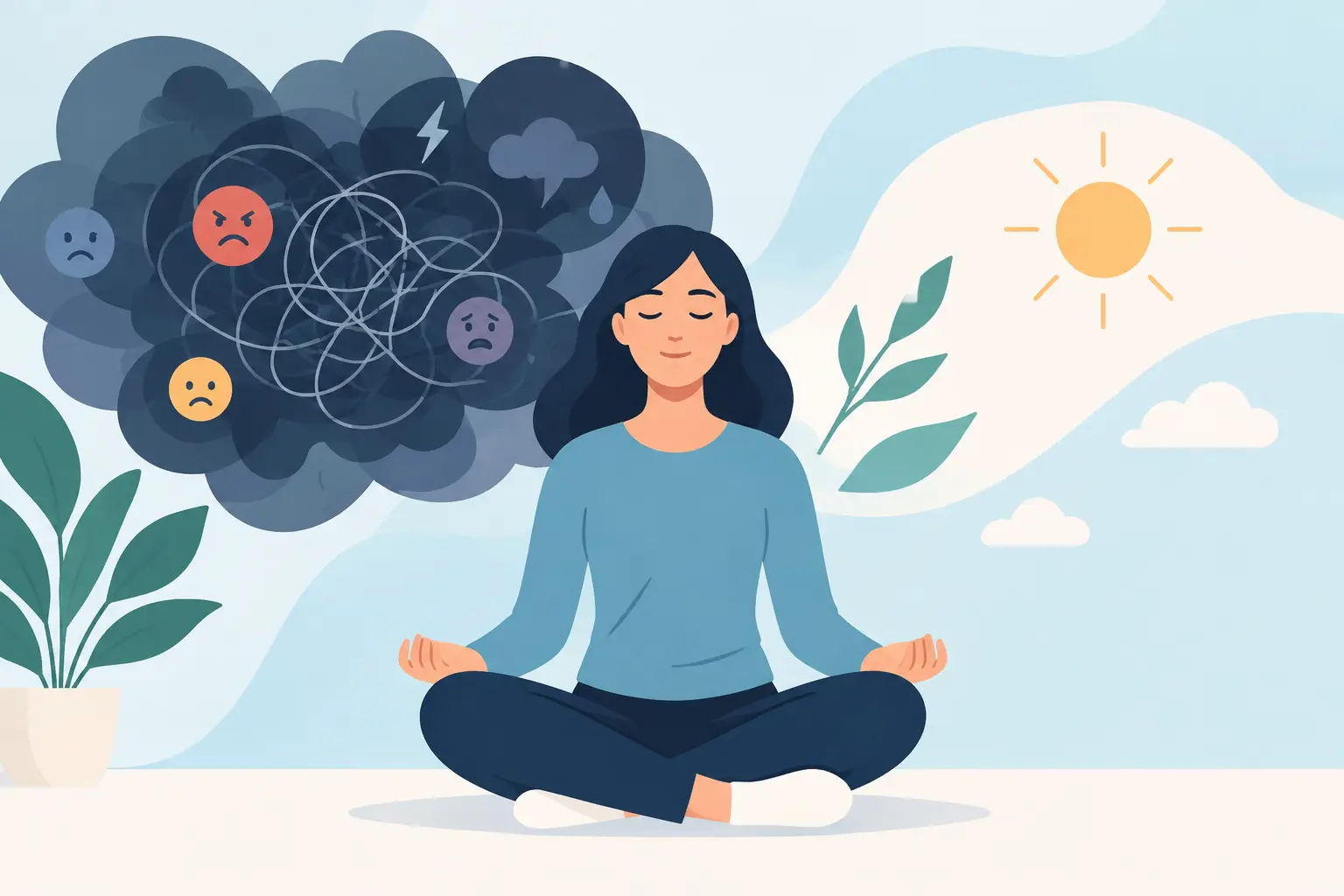
Your chest is tight. Your thoughts are racing. One small problem feels like proof that everything is falling apart. In that moment, knowing how to manage overwhelming emotions can feel impossible, because your mind is not asking for a perfect strategy. It is asking for safety.
You are not weak because you feel deeply. You are not broken because stress, grief, anger, fear, or shame sometimes takes over. You are a human being whose internal alarm system is working overtime. The goal is not to become emotionless. The goal is to stop handing every intense feeling the steering wheel.
That is a skill. And like every skill that changes a life, it is built in small, brave repetitions.
Stop trying to solve everything while activated
When emotions surge, many people make the same mistake: they immediately try to figure out their whole life. They replay conversations, predict disasters, criticize themselves, scroll for distractions, or make big decisions just to escape the discomfort.
But an overwhelmed brain is not a clear brain. It tends to speak in extremes: “I always mess things up.” “Nothing will change.” “I cannot handle this.” Those thoughts may feel convincing, but feelings are signals, not final verdicts.
Give yourself one powerful rule: do not make permanent conclusions from temporary emotional states. You do not need to solve the relationship, the career problem, the financial worry, or the future in the next ten minutes. First, bring your system down from alarm.
Say it plainly: “I am overwhelmed right now. I do not have to fix everything right now.” This is not avoidance. It is emotional leadership.
Start with your body, not your thoughts
You cannot always think your way out of an emotional storm. Your body needs evidence that the threat has passed or that you are safe enough to respond wisely.
Start by changing your physical state. Place both feet firmly on the floor. Relax your jaw. Lower your shoulders. Breathe in slowly through your nose, then make your exhale slightly longer than your inhale. Repeat for a few minutes without demanding that you feel calm immediately.
Then orient yourself to the room. Name five things you can see. Feel the texture of an object near you. Notice the temperature on your skin. Drink cold water or step outside for a few breaths of fresh air. These actions sound simple because they are simple, but simple is exactly what your overwhelmed nervous system can use.
If anger is rising, movement may help more than stillness. Take a brisk walk, shake out your arms, clean one small area, or do a short burst of exercise. If sadness is taking over, choose softness: a blanket, a warm shower, gentle music, or sitting somewhere quiet without forcing yourself to be productive.
The right tool depends on the emotion. The question is not, “What should I be feeling?” Ask, “What does my body need in order to settle enough to choose my next step?”
Name the emotion without becoming it
There is a major difference between saying, “I am a failure,” and saying, “I am feeling ashamed because I think I failed.” One statement turns pain into identity. The other creates space between you and the emotion.
Try to name what is really there. Sometimes “I am stressed” is covering fear. Sometimes anger is protecting hurt. Sometimes numbness is exhaustion. Get honest without becoming cruel.
You might say: “I feel anxious about money.” “I feel rejected after that conversation.” “I feel grief because this chapter is ending.” “I feel angry because one of my boundaries was crossed.”
Naming an emotion does not make it bigger. It often makes it less confusing. Once you know what you are carrying, you can respond with intention rather than reacting from the first wave.
Give the feeling a container
Overwhelming emotions grow when they take up every corner of your day. A container tells your mind, “This matters, and I will make room for it, but it will not own all of me.”
Set a timer for ten minutes and write without editing yourself. Put the ugly thoughts on paper. Write what happened, what you fear, what you wish you could say, and what you need. You are not writing a final truth. You are releasing pressure.
When the timer ends, shift into one grounding action. Wash the dishes. Take a walk around the block. Make food. Send one practical email. Put on a guided meditation. The transition matters. It teaches your brain that you can feel something fully without being trapped inside it.
If journaling makes you spiral, keep it shorter. Write only three sentences: what I feel, what triggered it, and what I need next. Self-awareness should create relief, not become another way to overanalyze yourself.
Choose one next move, not a new life plan
When your emotions are loud, your next move should be small enough to complete. Momentum is medicine when you feel stuck.
Maybe the next move is texting a trusted friend: “I am having a hard day. Can you talk later?” Maybe it is making an overdue appointment, eating something nourishing, turning off notifications, or going to bed before you try to solve tomorrow.
The move does not have to be impressive. It has to be supportive. Every time you follow through on one healthy action while overwhelmed, you rebuild self-trust. You prove to yourself that your emotions can be intense without making you powerless.
This is where real mindset change happens. Not through pretending that life is easy, but through repeatedly choosing a response that protects your peace and your future.
Be careful with the stories you repeat
Emotions often arrive with a story attached. Anxiety says, “Something bad is about to happen.” Shame says, “There is something wrong with me.” Anger says, “Nobody respects me.” Sometimes there is useful information in these thoughts. Sometimes they are old patterns speaking through a current situation.
Pause and ask three questions. What are the facts? What am I assuming? What would I say to someone I love if they were feeling this way?
You do not need to force a positive thought that you do not believe. Reach for a steadier thought instead. Replace “I cannot handle this” with “This is hard, and I can handle the next ten minutes.” Replace “My life is ruined” with “I am facing a problem, and I can take one step at a time.”
That is not fake optimism. It is training your mind to stop turning discomfort into catastrophe.
Build emotional resilience before the next storm
Learning how to manage overwhelming emotions is not only about crisis moments. Your daily habits determine how much emotional capacity you have when life gets difficult.
Sleep, regular meals, movement, quiet time, supportive relationships, and limits around constant news or social media are not small things. They are part of your emotional foundation. When you are depleted, every challenge hits harder. When you care for your baseline, you create more space between a trigger and your reaction.
A daily practice can be brief. Five minutes of breathing before work. A short audio that redirects your mindset. A walk without your phone. A nighttime check-in where you ask, “What am I carrying that I do not need to take into tomorrow?” Total Mindshift is built around this kind of consistent inner training, because lasting transformation comes from what you practice, not what you understand once.
You may also need stronger boundaries. If a certain person, environment, habit, or commitment repeatedly leaves you emotionally wrecked, your feelings may be asking you to pay attention. Boundaries are not punishment. They are protection for the life you are trying to build.
Know when to reach for more support
You do not have to carry every emotional burden alone. Talk to a trusted person when you need connection, and consider a licensed mental health professional if intense emotions are persistent, affecting daily life, or tied to trauma, anxiety, depression, or addiction.
If you feel at risk of harming yourself or someone else, contact emergency services or a crisis support line right away. Asking for immediate help is an act of strength, not failure.
Your emotions are not here to destroy you. They are here to be heard, understood, and guided. The next time the wave rises, do not demand that yourself become someone who never struggles. Be the person who pauses, breathes, chooses one supportive action, and keeps moving toward freedom.
Latest Post

How to Manage Overwhelming Emotions Today
October 21, 2026
No Comments

7 Habits Supporting Lasting Behavior Change
October 19, 2026
No Comments

Online Coaching Reviews: What Real Change Looks Like
October 17, 2026
No Comments