

Emotional Regulation Guide for Hard Days

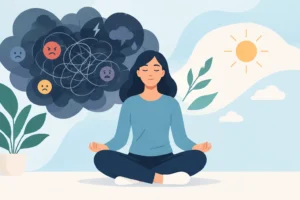
Your emotions can make a five-minute moment feel like a life-defining crisis. One harsh comment, an unexpected bill, a difficult conversation, or a bad night of sleep can send your mind racing toward anger, shame, fear, or hopelessness. This emotional regulation guide is for those moments when you do not want your feelings to run your life anymore.
Emotional regulation is not about becoming cold, pretending you are fine, or forcing yourself to be positive. It is the ability to notice what is happening inside you, create enough space to respond, and choose an action that supports the person you are becoming. That is where real freedom begins.
What Emotional Regulation Really Means
You are not weak because you feel deeply. You are human. The problem begins when an emotion takes control of your words, habits, decisions, and relationships before you have had a chance to think.
Emotional regulation means you can feel anger without sending the text that creates more damage. You can feel anxiety without abandoning your goals. You can feel sadness without deciding your whole future is hopeless. The feeling is real, but it does not have to become the driver.
This takes practice because your nervous system learns patterns. If you have spent years reacting by people-pleasing, shutting down, overthinking, numbing out, lashing out, or giving up, those responses may feel automatic. They are not your identity. They are learned protection strategies, and learned patterns can be changed.
The goal is not to never get triggered. That standard will only make you judge yourself more harshly. The goal is to shorten the gap between being triggered and returning to yourself.
Emotional Regulation Guide: Start With the Body
When you are emotionally flooded, logic is usually not the first tool that will help. Your body needs a signal of safety before your mind can access perspective. Trying to reason with yourself while your heart is pounding and your thoughts are spiraling is like trying to steer a car on ice at full speed.
Start by interrupting the physical momentum. Put both feet on the floor. Relax your jaw. Lower your shoulders. Breathe in gently through your nose and make your exhale longer than your inhale. You do not need a perfect breathing technique. You need to stop feeding the alarm.
Try this simple reset: inhale for four counts, exhale for six counts, and repeat for one to two minutes. While you do it, look around the room and name a few neutral things you can see. A chair. A window. A blue shirt. A lamp. This brings your attention out of the imagined future and back into the present moment.
If sitting still makes you feel worse, move. Walk around the block, stretch, shake out your arms, or take a cool shower. Your body carries emotional energy. Giving it a healthy outlet can reduce the pressure enough for you to choose your next move with clarity.
Name the Emotion Without Becoming It
There is a big difference between saying, “I am a mess,” and saying, “I am feeling overwhelmed right now.” The first statement turns a temporary state into an identity. The second creates space.
Be specific when you can. Anger may be disappointment. Anxiety may be uncertainty. Jealousy may be grief, loneliness, or a fear that you are falling behind. When you name the real emotion, you can respond to the real need.
Ask yourself: What am I feeling? What happened just before this feeling rose? What story is my mind telling me? Then ask the question that creates change: What do I need right now that will not hurt me tomorrow?
Sometimes the answer is rest. Sometimes it is a boundary. Sometimes it is an honest conversation, food, movement, support, or simply time before responding. Emotional maturity is not always dramatic. Often, it is choosing not to make a permanent decision from a temporary storm.
Separate the Trigger From the Truth
A trigger can feel like proof. If someone does not reply, your mind may say you are being rejected. If you make a mistake, it may say you always ruin everything. If someone disagrees with you, it may say you are not respected.
But a strong emotional reaction is not always a clear reading of reality. It can be an old wound asking to be heard.
Before you act, challenge the first story. What facts do you actually know? What assumptions are you adding? Is this situation reminding you of something from your past? Could there be another explanation that is less punishing than the one your mind chose first?
This is not about gaslighting yourself or ignoring red flags. If someone repeatedly violates your trust, treats you poorly, or crosses a boundary, your emotions may be giving you valuable information. Regulation helps you see that information clearly. Reactivity makes it harder to decide what to do with it.
Build a Pause Between Feeling and Action
Your power lives in the pause. It may be ten seconds, ten minutes, or one full night of sleep. The length depends on the situation and the intensity of the emotion.
Create a personal rule for your hardest moments. You might decide that you do not send emotionally charged messages after 9 p.m., make major purchases when stressed, or have serious relationship conversations when you are exhausted. These are not restrictions. They are acts of self-respect.
When the urge to react is intense, say this to yourself: “I can respond later. I do not have to solve this while I am activated.” Repeat it until your body believes it.
A useful practice is to write the unfiltered response in your notes app or journal, then wait. Let the angry version come out privately. After the emotional wave passes, read it again and ask whether it reflects your values or only your pain. You may still need to speak up. You may simply speak with more strength and less regret.
Regulate Before You Reach for Numbing
Everyone has a default escape route. It may be scrolling, drinking, overeating, spending, gambling, working too much, isolating, or chasing validation from people who cannot give you peace. These habits often begin as an attempt to avoid pain, but they can quietly deepen it.
Do not shame yourself for wanting relief. Wanting relief makes sense. The shift is learning to choose relief that actually helps.
Before you reach for the habit, pause and ask, “What am I trying not to feel?” Then give yourself one healthier option before you decide. Drink water. Step outside. Listen to a grounding audio. Call someone safe. Take ten slow breaths. Eat a real meal. Write for five minutes.
You may still feel the urge afterward. That does not mean you failed. Every time you delay an automatic reaction, you are teaching your brain that discomfort can be survived without self-sabotage.
Practice Regulation on Ordinary Days
The strongest emotional tools are built before the crisis. If you only try to regulate when you are at your limit, everything will feel harder. Small daily practices make your nervous system less likely to treat every challenge as an emergency.
Protect the basics that affect your emotional capacity: sleep, regular meals, hydration, movement, quiet time, and honest connection. These are not glamorous answers, but they matter. A depleted body has less room for patience, perspective, and discipline.
It also helps to create a daily check-in. Spend two minutes asking yourself how you feel, what you need, and what you have been avoiding. Total Mindshift teaches that lasting change is built through consistent mental rewiring, not one burst of motivation. A few intentional minutes each day can become evidence that you are someone who shows up for yourself.
When You Need More Than Self-Help
Self-regulation skills are powerful, but they are not meant to carry every burden alone. If your emotions feel unmanageable, you are experiencing panic, trauma symptoms, thoughts of harming yourself or others, or you are relying on substances to get through the day, reach out to a qualified mental health professional or urgent support in your area.
Asking for help is not a failure of mindset. It is a courageous decision to stop carrying pain in silence. The right support can help you understand patterns that feel impossible to break by yourself.
You do not need to wait until you are perfectly calm to become the person you want to be. Start with one pause, one honest question, one better choice. Your feelings may be loud today, but they are not the final authority over your life.
Latest Post

Build a Career Change Mindset That Moves You
October 23, 2026
No Comments
How to Manage Overwhelming Emotions Today
October 21, 2026
No Comments

7 Habits Supporting Lasting Behavior Change
October 19, 2026
No Comments