

How to Develop Inner Peace When Life Feels Heavy
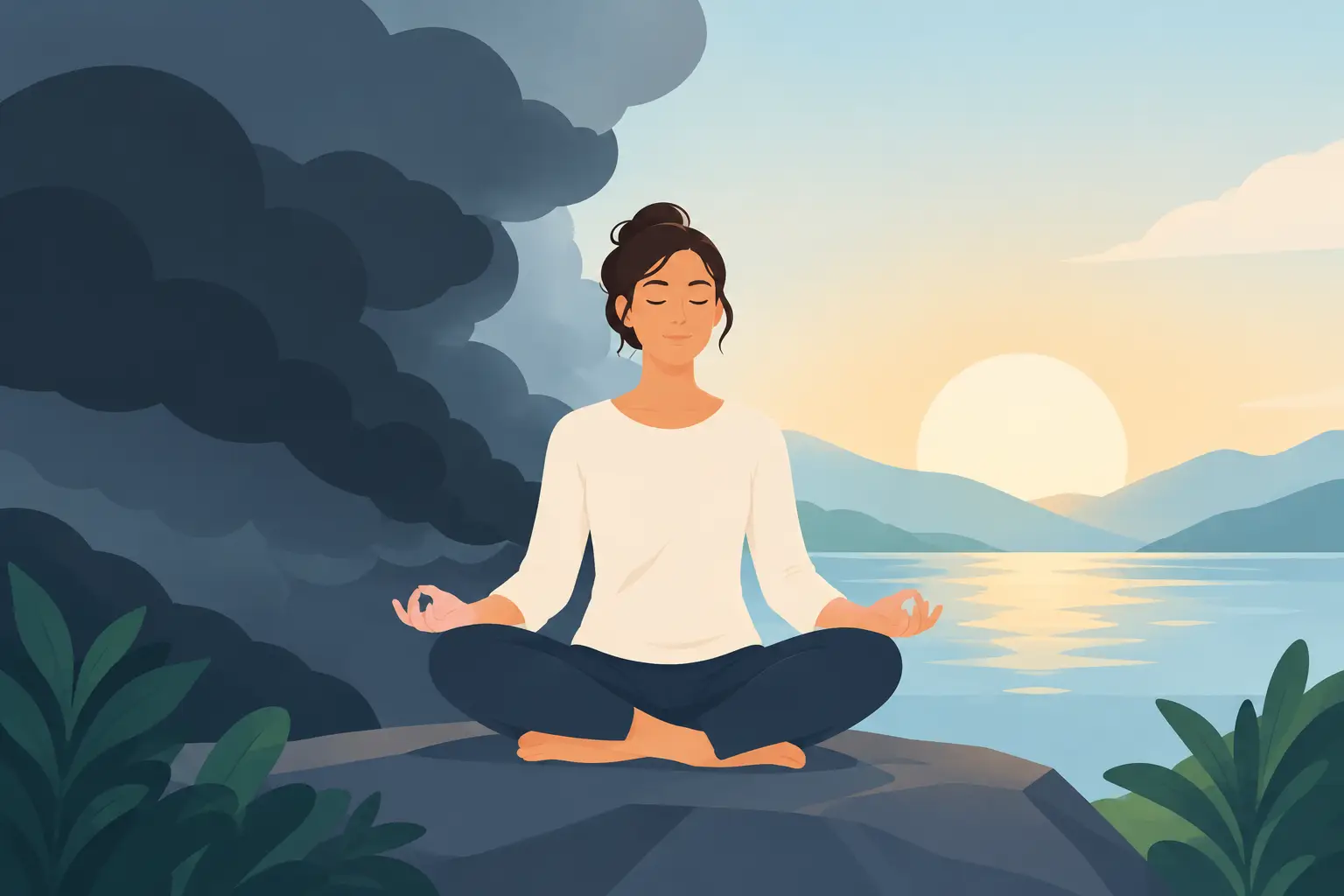
The moment your mind starts replaying a hard conversation at 2 a.m., inner peace can feel like something reserved for people with easier lives. But peace is not a perfect schedule, a silent house, or the absence of problems. Learning how to develop inner peace means training yourself to come back to your center when pressure, fear, disappointment, or old habits try to pull you away from it.
You do not need to have every answer before you can feel better. You need a way to interrupt the mental patterns that keep you trapped in stress and start building a relationship with yourself that feels safe, strong, and honest.
Inner peace is not passive
A lot of people confuse inner peace with giving up, avoiding conflict, or pretending nothing bothers them. That is not peace. That is suppression, and suppression eventually finds a way out through burnout, resentment, anxiety, or self-sabotage.
Real inner peace is the ability to feel your emotions without letting every emotion run your life. You can be disappointed and still stay grounded. You can face a difficult decision without spiraling. You can want more from life without believing you are broken because you do not have it yet.
This takes practice because your mind has learned patterns over years. If you have spent a long time expecting the worst, criticizing yourself, or living in survival mode, your nervous system may treat calm as unfamiliar. That does not mean peace is out of reach. It means you are being called to build it deliberately.
Stop treating every thought like the truth
Your thoughts can sound convincing, especially when you are tired, lonely, stressed, or afraid. “I always mess things up.” “Nothing is going to change.” “They must think I am not enough.” These thoughts may feel true in the moment, but feelings are not always facts.
The first shift is simple: create a little space between you and the thought. Instead of saying, “I am failing,” try, “I am having the thought that I am failing.” That small change reminds you that you are the observer, not the story.
You do not need to argue with every negative thought or force yourself into fake positivity. Ask a better question: Is this thought helping me move forward, or is it feeding the pain I am trying to escape? If it is feeding the pain, choose a steadier response. You might say, “This is hard, but I can take one clear next step.”
That is mindset rewiring in real life. Not pretending life is easy. Not waiting to feel confident. Choosing a thought that gives you room to act.
Try a daily thought reset
When your mind is loud, write down the one thought that is draining you most. Then write what you know for certain, without exaggeration. Finally, write one supportive thought you can practice instead.
For example, “I will never get my life together” could become: “I am overwhelmed right now, but I have changed difficult patterns before. Today I can handle one task.” It may not create instant relief, but repeated often, this practice changes the inner voice you live with.
Give your body a chance to feel safe
You cannot think your way out of every stressful state. Sometimes your body needs to receive the message that the danger has passed before your mind can settle down.
Start small. Put both feet on the floor. Relax your jaw. Drop your shoulders. Breathe in slowly through your nose, then make your exhale a little longer than your inhale. Do that for two minutes before you check your phone, respond to an upsetting message, or make a decision from panic.
This is not about becoming perfectly calm. It is about breaking the automatic cycle. A long exhale tells your body to soften. A short walk gives restless energy somewhere to go. A guided meditation can help you stop carrying the entire day into the next hour.
If sitting still makes you more anxious, do not force it. Inner peace can be practiced while walking, stretching, cleaning, driving in silence, or standing outside for five minutes. The best practice is the one you can return to consistently.
Make peace with what you cannot control
Much of our exhaustion comes from trying to manage things that were never ours to manage: other people’s opinions, their moods, the past, the timing of an opportunity, or every possible outcome.
Acceptance does not mean you approve of what happened. It does not mean you stop pursuing change. It means you stop wasting your energy fighting reality long enough to decide what is actually in your hands.
When something is bothering you, separate it into two parts. What can you influence, and what must you release? You may not control whether someone understands you, but you control how clearly you communicate and whether you keep abandoning yourself to keep the peace. You may not control how quickly your goals happen, but you can control the habits you practice today.
This distinction is freeing. Peace grows when you stop demanding certainty from life and start trusting your ability to meet life as it comes.
Protect your attention like it matters
Your attention is not an unlimited resource. If your day begins with social media, bad news, comparison, and other people’s demands, it is no surprise that your mind feels scattered before breakfast.
You do not have to disappear from the world to develop inner peace. But you do need boundaries around what repeatedly pulls you out of yourself. Notice which inputs make you feel tense, inadequate, angry, or numb. Then reduce them where you can.
Create a small protected space in your day. It might be ten minutes in the morning before your phone, a quiet drive without a podcast, or an evening routine where you stop consuming and start reflecting. Use that time to ask, “What do I need today?” Not what everyone else needs from you. What do you need to stay emotionally clear and aligned?
For some people, the answer is rest. For others, it is an honest conversation, movement, prayer, journaling, or finally taking action on the task they have been avoiding. Inner peace is not always comfortable. Sometimes it requires a boundary that disappoints someone else.
Keep small promises to yourself
Self-trust is one of the deepest sources of peace. When you constantly tell yourself you will start tomorrow, speak up next time, stop the habit, or take care of your health, then break that promise, your inner world becomes unstable. You begin to doubt your own word.
Do not try to fix this with a dramatic overhaul. Build trust through promises so small that you can keep them. Drink a glass of water when you wake up. Take a ten-minute walk. Spend five minutes organizing your thoughts. Go to bed when you said you would, even if it is only one night this week.
These actions may look ordinary, but they send a powerful message: I do not abandon myself anymore. Each kept promise gives your mind evidence that you are capable of change.
At Total Mindshift, this is why daily guidance matters. A powerful breakthrough can open the door, but repetition is what helps a new way of thinking become part of your life. Peace is built through the choices you repeat when nobody is applauding.
Let your emotions move instead of storing them
You are allowed to feel angry, sad, jealous, guilty, or scared. The goal is not to become someone who never feels deeply. The goal is to stop making your emotions your identity.
When an emotion rises, name it without judgment. “I am feeling hurt.” “I am feeling fear.” Then ask what it is asking for. Fear may be asking for preparation. Anger may be showing you that a boundary was crossed. Sadness may be asking you to slow down and grieve.
Be careful not to turn every emotion into an emergency. You can feel a wave without acting on it immediately. Give yourself a pause before sending the text, quitting the job, spending the money, or saying something you cannot take back. Peace often lives in that pause.
Build a life that supports the peace you want
Inner peace is not just a private feeling. Your environment, habits, relationships, and commitments affect it. If you keep saying yes to situations that drain you, no amount of positive thinking will fully compensate.
Take an honest look at your life. Where are you living out of fear, guilt, or the need to prove yourself? What is one area where a healthier choice would give you more room to breathe? You do not need to change everything this week. Choose one truth and honor it.
Your life can feel heavy without being hopeless. Start with one calmer breath, one stronger thought, one boundary, one promise kept. The peace you want is not waiting at the end of a perfect life. It begins the moment you decide you are worth returning to.
Latest Post

Building Healthier Routines Guide for Real Change
November 2, 2026
No Comments

Life Coaching Versus Counseling Explained
October 31, 2026
No Comments

Can Mindset Coaching Change Lives for Good?
October 29, 2026
No Comments