
Key Takeaways
- Women are increasingly adopting meditation and mindfulness—now nearly twice as likely as men—to reclaim inner peace amid rising global uncertainty and the “mental load.”
- Digital accessibility and market growth are fueling the trend: the global meditation market was valued at about $9.2 billion in 2026 with projections to exceed $33 billion by 2033, and over 2,500 apps (Calm and Headspace holding ~35% market share) broaden access.
- Emerging science shows particular neurobiological benefits for women: studies report larger decreases in rumination, guilt, and irritability, and fast measurable changes in the amygdala—even novice meditators can induce changes in as little as five minutes.
- Meditation is a response to an “over-functioning” culture and the disproportionate domestic and emotional caregiving burdens on women—practices like MBSR offer a sanctioned way to prioritize self-care and reduce stress/cortisol.
- Experts warn mindfulness is not a universal cure: during certain severe crises being hopeful or other interventions (therapy, community support, systemic change) may be more effective, so meditation should be one tool among many.
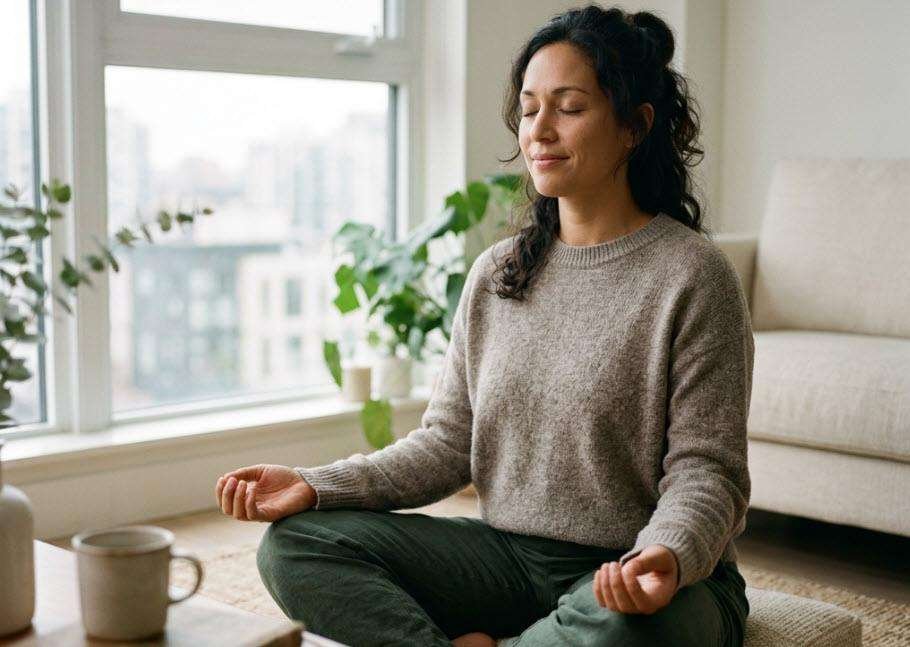
As global uncertainty and the “mental load” reach new heights, a growing number of women are reclaiming their inner peace through meditation. New data reveals that women are now nearly twice as likely as men to adopt mindfulness practices, fueled by a surge in digital accessibility and a deepening body of scientific evidence suggesting that for the female brain, the “pause” may be the most powerful tool for resilience.
In an era defined by what many social scientists call “polycrisis” – the simultaneous occurrence of global health concerns, economic shifts, and environmental anxiety – the search for a sanctuary has moved inward. For women, who statistically shoulder a disproportionate share of domestic labor and emotional caregiving, this search has manifested in a dramatic surge in meditation and mindfulness practices. According to the latest market analysis for 2026, the global meditation market has reached a valuation of approximately $9.2 billion, with a projected growth path to exceed $33 billion by 2033. This growth is not merely a financial trend; it is a demographic one.
The Science of the Female Pause
While meditation was once viewed as a niche spiritual pursuit, it has firmly transitioned into a mainstream clinical and wellness staple. Research indicates that women are not only the primary consumers of mindfulness apps like Calm and Headspace – which now dominate over 35% of the market – but they also experience unique neurobiological benefits from the practice.
A landmark study from Brown University demonstrated that women who practice mindfulness three times a week show significantly greater decreases in negative emotions like guilt and irritability compared to their male counterparts. Rahil Rojiani, one of the study’s authors, noted that women are often more prone to “fixate” or ruminate in response to stress. Meditation, Rojiani suggests, helps break this cycle, preventing negative feelings from being blown out of proportion and fostering a sense of self-compassion.
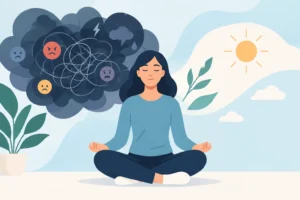
Furthermore, recent 2025 research published in PNAS from the Icahn School of Medicine at Mount Sinai used advanced brain-monitoring technology to show that even novice meditators can induce changes in the amygdala – the brain’s “fear center” – in as little as five minutes. For women juggling the “mental load” of career, family, and community, these five minutes represent a biological reset.
Beyond the “Full-Time Goddess” Archetype
The surge in practice is also a response to the “over-functioning” culture that many women face. From the “stay-at-home-mom” who acts as a chef, chauffeur, and domestic manager, to the corporate leader navigating workplace glass ceilings, the pressure to be “everything to everyone” has led to a cortisol crisis.
“It is indeed a radical act of love just to sit down and be quiet for a time by yourself,” says Jon Kabat-Zinn, the founder of Mindfulness-Based Stress Reduction (MBSR). His teachings, which emphasize that mindfulness is about “heartfulness” and “wise and affectionate attention,” have resonated deeply with a female audience looking for permission to prioritize their own mental state.
This “radical act” is now supported by a vast digital ecosystem. Over 2,500 meditation apps are currently available, offering everything from “body scans” for prenatal stress to AI-driven personalized sessions for menopause-related sleep disturbances. This accessibility has democratized a practice that was once gated by expensive retreats or time-consuming temple visits.
A Balanced Perspective: Not a Panacea
Despite the overwhelming positive data, experts caution that mindfulness is not a universal cure-all. A 2024 study conducted by researchers at Clemson University and North Carolina State University found that in certain “unquestionably difficult” periods, such as severe professional upheaval, a mindset of “hope” or “optimism” was sometimes more effective for resilience than mindfulness alone.
For some, being “present” during a traumatic moment can actually exacerbate distress. This highlights the importance of a balanced approach to mental health, where meditation is one tool among many, including therapy, community support, and systemic change.
Conclusion: Reclaiming the Present
As we move further into 2026, the trend shows no signs of slowing. The “quiet revolution” of meditation among women is more than a reaction to a troubled world; it is a proactive reclamation of the present moment. By shifting the focus from “doing” to “being,” women are finding that while they cannot always control the external chaos, they can control the “mirror of the mind.”
In the words of Jon Kabat-Zinn, “You can’t stop the waves, but you can learn to surf.” For millions of women today, meditation is the surfboard that allows them to navigate the high seas of modern life with grace, resilience, and an unwavering sense of self.
References
If you want assistance with this article, please Contact Us
Latest Post
7 Habits Supporting Lasting Behavior Change
October 19, 2026
No Comments
Online Coaching Reviews: What Real Change Looks Like
October 17, 2026
No Comments
Best Self Improvement Audio Programs for Change
October 15, 2026
No Comments