

Key Takeaways
- Emotional resilience is a learned set of patterns, not an innate trait; it means recovering and moving forward, not never feeling overwhelmed.
- Learn to pause before reacting—create small delays (breath, walk, wait ten minutes) to interrupt automatic negative stories and choose a calmer response.
- Change your inner dialogue from harsh self-criticism to honest, supportive statements that acknowledge difficulty without surrendering direction.
- Support your nervous system—prioritize sleep, hydration, movement, and reduced digital stimulation—so emotions feel less chaotic and resilience is easier to build.
- Build lasting resilience by reframing setbacks as feedback, keeping small promises to yourself to build trust, protecting your environment, and seeking help or rest when needed.
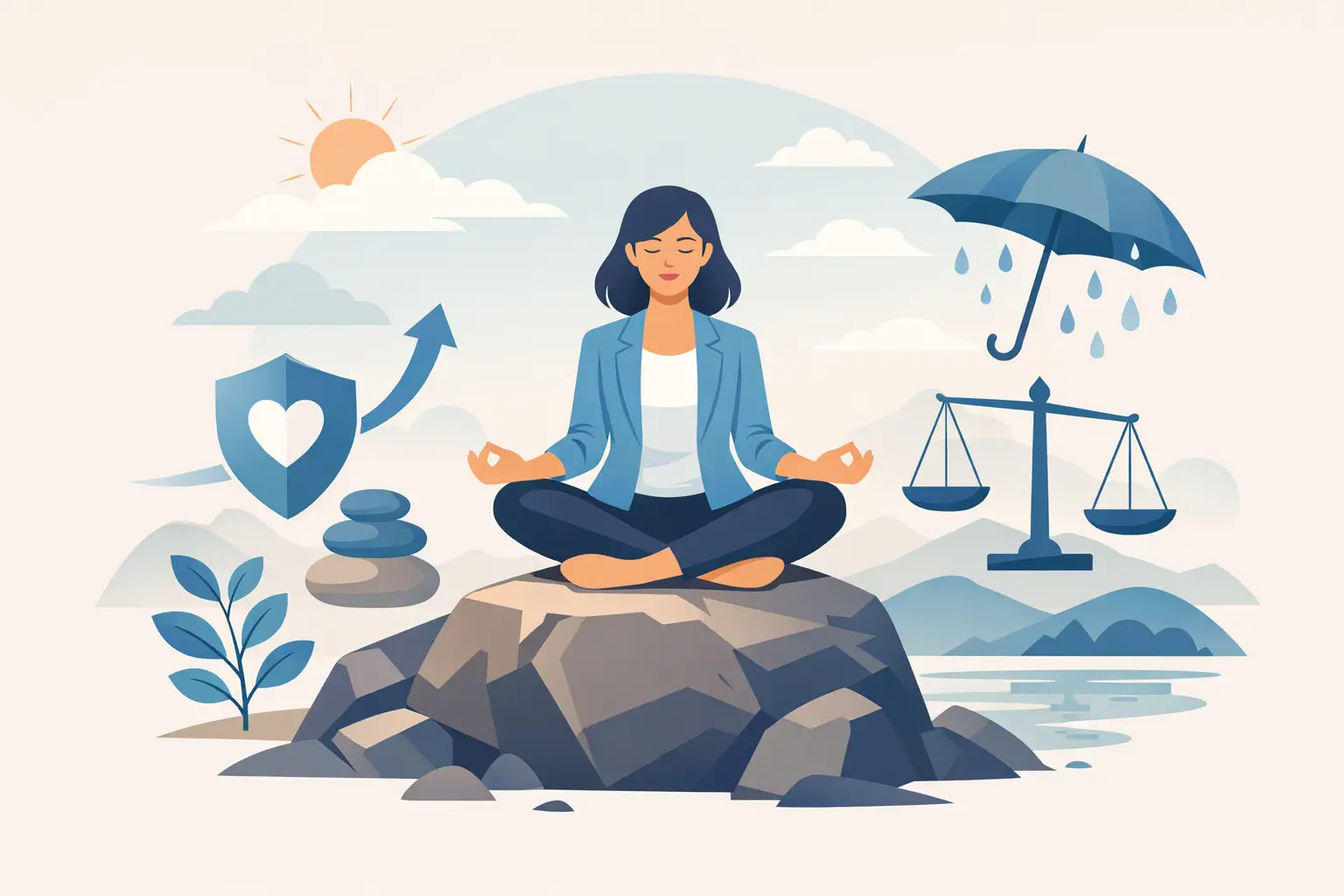
Some people look calm under pressure and assume they were born that way. They were not. If you want to learn how to build emotional resilience, start here: resilience is not a personality trait reserved for the lucky few. It is a set of patterns you can practice until your mind stops treating every setback like a personal collapse.
That matters because life does not wait for you to feel ready. Stress shows up in your body, your relationships, your money decisions, your habits, and the way you speak to yourself when nobody else is around. Emotional resilience is what helps you stay standing without going numb. It gives you the strength to feel, recover, and move forward with clarity.
What emotional resilience really means
Emotional resilience is your ability to handle pressure, disappointment, uncertainty, and emotional pain without losing yourself in the process. It does not mean pretending everything is fine. It does not mean becoming hard, detached, or unaffected.
Real resilience is softer and stronger than that. It means you can get triggered without staying trapped. You can feel fear without surrendering your direction. You can have a bad day without deciding your whole life is falling apart.
This is where many people get stuck. They think resilience means never breaking down. The truth is closer to this: resilient people still get overwhelmed, but they recover faster because they have built better internal habits.
How to build emotional resilience in real life
You do not build resilience during your best week. You build it in the ordinary moments when your old reactions are tempting and your new standards still feel unfamiliar. That is why emotional resilience has less to do with inspiration and more to do with repetition.
The first shift is learning to pause before you react. Most emotional suffering gets extended by speed. Something happens, you feel hurt or threatened, and your mind instantly creates a story. Maybe it says, “I always mess things up,” or “Nothing ever changes,” or “They do not respect me.” That story feels true because it arrives fast. But speed is not wisdom.
A short pause interrupts the spiral. One deep breath. A walk around the block. Ten minutes before sending the text. A quiet moment before making the decision. That space is where resilience begins, because it gives you a chance to choose your response instead of being dragged by your first emotion.
The next shift is changing the way you speak to yourself when life gets heavy. Many people are trying to recover emotionally while being bullied by their own inner voice. They make one mistake and attack themselves. They feel tired and call themselves weak. They hit a setback and decide they are failing.
That approach does not make you stronger. It makes you more fragile. If you want to build resilience, your inner dialogue has to become honest and supportive at the same time. Not fake positivity. Not excuses. Just grounded truth. “This is hard, but I can handle this moment.” “I am disappointed, but I am not defeated.” “I do not need to have it all figured out today.”
Your nervous system needs training too
A lot of emotional struggle is not just mental. It is physical. If your body is running on poor sleep, constant stimulation, too much caffeine, no stillness, and nonstop stress, your emotions will feel louder and more chaotic. You are not broken. You are overloaded.
That is why resilience is easier to build when your nervous system feels safe enough to settle. Sleep matters. So does hydration. So does movement. So does giving yourself a few quiet minutes without a screen, a podcast, or another demand pulling at your attention.
This does not have to become a perfect wellness routine. Keep it simple and repeatable. A short morning walk, five minutes of breathing, consistent sleep, and a little less digital noise can change the emotional tone of your day more than most people realize. The goal is not control. The goal is capacity.
Stop treating every emotion like an emergency
One of the biggest breakthroughs in emotional resilience comes when you stop fearing your own feelings. So many people panic the moment sadness, anger, shame, or anxiety rises up. They immediately try to suppress it, distract from it, or outrun it. But what you resist aggressively tends to stay longer.
Emotions are signals. They need attention, not worship. When you treat every uncomfortable feeling like a crisis, you teach your brain that discomfort is dangerous. When you allow the feeling to exist without immediately acting on it, you teach your brain that discomfort is survivable.
This is a powerful distinction. You do not need to obey every emotion to honor it. You can say, “I feel rejected right now,” without sending the angry message. You can say, “I feel afraid,” without abandoning your goals. Feelings deserve space, but they do not always deserve control.
Build a stronger meaning around setbacks
If you want to know how to build emotional resilience that actually lasts, pay attention to the meaning you attach to adversity. Two people can face the same setback and walk away with completely different futures. One sees proof of personal failure. The other sees feedback, pain, and a challenge to grow.
Neither response is automatic. Meaning is built.
This does not mean forcing a silver lining onto every hard moment. Some experiences are simply painful. Some losses should hurt. Some seasons are unfair. But even then, you still get to decide what the struggle is shaping in you.
Ask better questions in the middle of difficulty. Instead of “Why is this happening to me?” try “What is this asking me to strengthen?” Instead of “What is wrong with me?” try “What support or skill am I missing right now?” Those questions move you from helplessness to responsibility, and responsibility is where your power starts returning.
Your environment affects your resilience
You cannot build a steady inner life while constantly surrounding yourself with chaos, criticism, and emotional drain. Yes, resilience is internal. But your environment still matters.
If the people around you feed drama, dismiss your growth, or benefit from your self-doubt, your nervous system will stay on guard. That does not mean you need to cut everyone off overnight. It does mean you need to become more protective of what enters your mind each day.
Choose inputs that strengthen you. Conversations that tell the truth without tearing you down. Content that helps you think clearly. Mentorship that reminds you change is possible. This is one reason so many people feel a genuine shift when they start listening to supportive, focused guidance regularly. Consistent encouragement is not fluff. It helps retrain what your mind expects.
Resilience grows when you keep promises to yourself
Confidence and resilience are closely connected. Every time you make a small promise to yourself and keep it, you send a message inward: I can trust me. That trust becomes emotional stability over time.
Start smaller than your pride wants to. Grand plans often collapse under pressure. Real resilience grows from simple commitments you can honor even on low-energy days. Get out of bed when you said you would. Journal for five minutes. Go outside. Drink water before coffee. Sit with your emotions instead of numbing them immediately.
These actions may look minor, but they create evidence. And evidence is what changes identity. You stop seeing yourself as someone who falls apart at every challenge. You begin seeing yourself as someone who can face life with steadiness.
When emotional resilience feels out of reach
There will be seasons when resilience feels far away. Grief can do that. Burnout can do that. Depression, heartbreak, trauma, and major life change can make even basic coping feel difficult. In those moments, do not measure yourself by your highest-capacity days.
Measure yourself by your willingness to keep returning.
Sometimes resilience looks like getting help. Sometimes it looks like resting without guilt. Sometimes it looks like refusing to let one bad chapter become your identity. There is strength in pushing forward, but there is also strength in slowing down long enough to heal properly.
If you need support, take it. If you need structure, create it. If you need daily guidance to help reframe your thinking and steady your emotions, give yourself that gift. At Total Mindshift, this is the heart of transformation: not more empty motivation, but repeated mindset practice that helps you rebuild from the inside out.
The daily practice of becoming stronger
Emotional resilience is not built in one breakthrough moment. It is built in the quiet decision to begin again, again and again. Each time you pause instead of react, tell yourself the truth with compassion, care for your nervous system, and keep one more promise to yourself, you are becoming harder to shake.
You do not need to be fearless to become resilient. You do not need a perfect past, perfect habits, or perfect emotional control. You just need a willingness to train your mind and heart in a different direction.
Set yourself free from the belief that you are too sensitive, too late, or too broken to change. You are more adaptable than you think. And the strength you are looking for is not somewhere outside you. It is built every day you choose not to give up on yourself.
If you want assistance with this article, please Contact Us
Latest Post

Build a Career Change Mindset That Moves You
October 23, 2026
No Comments
How to Manage Overwhelming Emotions Today
October 21, 2026
No Comments

7 Habits Supporting Lasting Behavior Change
October 19, 2026
No Comments